Category Archives: Customer Psychology

Narrative Fallacy

During one of the client meetings, Vijay, Head of Talent Acquisition (which was earlier termed as Personnel, HR etc) was  waxing eloquent about how the right hiring and the talent management has been the crucial factor leading to the company’s phenomenal growth.

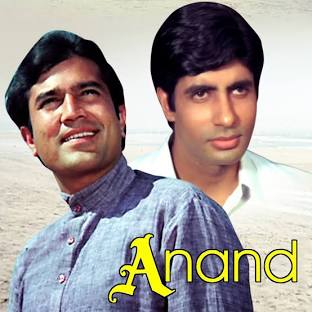
I was reading an article by a renowned Hindi film critic on similar lines. This media reporter had written about Hrishikesh Mukherjee (Hrishida as he was affectionately called), the Dadasaheb Phalke award winner having directed some of the notable films like Anupama, Anuradha, Satyakam etc. and how he selected Rajesh Khanna for the title role in Anand. The point he was trying to make was the success of the film was primarily due to selection of the right people be it the actors, music director, lyricists among others.  

Anand, made in 1970 is a story of a young man who has been diagnosed with intestinal cancer. The doctor had diagnosed that Anand will not survive for more than six months. In spite of the grim future, Anand has a cheerful disposition towards one and all and tries to keep everyone around him happy. The title role was played by Rajesh Khanna and the supporting role of Dr. Bhaskar Banerjee was played by Amitabh Bachchan.  

 But was the selection of people so logical and linear as we see in hindsight? When Hrishida first conceived of the project in 1955, the person whom he had him in mind was Raj Kapoor but both of them being busy in their own spheres; the project could not take off. By 1968 when Hrishida revived the project, Raj Kapoor was looking old for the role. Shashi Kapoor was thought of but he too was busy.

Hrishida wanted Kishore Kumar to do the role. When he visited Kishore Kumar’s house to discuss the role, the latter mistook the visitor from a distance to be someone else who had not paid Kishore Kumar’s dues. The security guard was instructed not to allow this visitor inside Kishore Kumar’s bungalow. (1)

By this time, Rajesh Khanna who was the emerging superstar got news of the project and approached Hrishikesh Mukherjee.  Anand was a low-budget film and Hrishida could not afford his fees. Those days Rajesh Khanna used to charge a princely sum of Rs 5 lakhs per film. When Hrishida expressed the apprehension, Rajesh proposed a creative solution. He said, “I will not charge a Rupee, instead can you give me the distribution rights for the Bombay territory”? This creative solution not only was accepted but also  helped Hrishida sell the film on a pan-India basis.

Amitabh Bachhan also had a wild card entry in the film. He was having a negative role  in a film called Parwana. One day Omprakash, the character actor met Hrishida and provided a strong recommendation for Amitabh who was cast in the supporting role of Dr. Bhaskar Banerjee.

The script had a role of Dr. Prakash Kulkarni, a friend of Dr. Bhaskar.  Ramesh Deo was a renowned actor in Marathi films and theatre. He was struggling to get a breakthrough in Hindi films. He had approached Hrishida a number of times in the past but could not cut much ice. Hrishida one day approached him for the role of Dr Prakash Kulkarni and had planned Nimmi for the role of his better half. Nimmi was one of the leading ladies of yesteryears who had acted in blockbusters like Aan, Udan Khatola etc.

When offered the role, she said, “The role is small; there is no heroine per se in the film and all the spot light is on Anand. Can you at least tell me  with whom am I paired with?” Hrishida: “He is Ramesh Deo, a seasoned and a successful actor in Marathi film industry.” Nimmi : “I have not heard that name. I have worked with stars like Dilip Kumar, it is below my dignity to work with such unknown people. Can I make you suggestion? Why don’t you take Raj Kumar for this role instead?” The next day, Hrishida and N.C.Sippy along with Nimmi went to Raj Kumar’s house in Worli.

After exchanging pleasantries, Raj Kumar asked Nimmi to chat up with his wife in the kitchen and said, “Incidentally I have my reservations taking up this role with Nimmi. She has the looks and the charm but that is the past.”

Apart from casting aspersion on Nimmi, Raj Kumar demanded that he needs to have at least a song on him. Hrishida dropped him like a hot potato.

Back to square one, Hrishida zeroed in on Ramesh Deo. Chess was their common interest. One day when he went to Deo’s  flat in Bandra for a game of chess, Hrishida was quite impressed with Seema, Ramesh’s wife. Seema was a leading Marathi actress even otherwise.

When Hrishida said, “Ramesh, why did not you suggest Seema for this role”? Ramesh said, “ First of all I myself was not sure of my role, how could I recommend her?” With quirk of fate, Ramesh and Seema Deo thus got the roles of Dr. and Mrs Kulkarni.

The music composer was decided as Salil Chowdhary and the lyricist as Gulzar. The film had a provision for only three songs. But when the film was completed, it had four songs: Maine Tere liye and Na Jiya Laage Na by Gulzar & Zindagi kaisi Hai Paheli and Kahin Door Jab Din Dhal Jaye by Yogesh. How did Yogesh get a wild card entry?

In the late sixties, Gulzar was an established lyricist in the mainstream Hindi cinema whereas Yogesh was a struggling one who was mainly bracketed as a lyricist for B-Grade action films. 

Circa 1967 there was a film producer called Anand Gadnis who was making a film and roped in Basu Bhattacharya as  the director and Salil Chowdhury as the music director. Gulzar was to be the lyricist. But whenever meetings for the music were scheduled, Gulzar could not make it. As the producer wanted the project to go on fast-track, he asked Salilda to look out for an alternative. Salilda knew Yogesh. This was a golden opportunity for Yogesh to get into popular mainstream cinema.  Within no time, he penned lyrics for three situations. Salilda composed the music and later recorded. Due to some unfortunate circumstances, the project was shelved. Yogesh cursed his bad luck, felt that he is destined to be with B grade films. He felt making an entry into the popular genre was not his cup of his tea. He went back to Lucknow fully dejected.

Three months later, a  producer called L. B Lachman approached Salilda for a new film called Annadata starring Jaya Bhaduri and Anil Dhawan. When the contract was signed, Salilda said that he already has three songs ready from a previous project. Lachman picked two from the lot; the deal was that the payment was to be released only after all the songs were composed and recorded.

Lachman happened to be close friends with Hrishida. When he shared the audio recordings of the two songs; Hrishida liked the songs and showed interest to purchase both. A compromise was worked out. Hrishida purchased one and that was Kahin Door Jab Din Dhal Jaye.

Next day Yogesh was called for  and Hrishida made a cheque payment of Rs 2500 to Yogesh. It was the debut of Yogesh in A grade films. Incidentally this song is based on a Bengali song, Amay Proshno Kore Neel Dhrubotara sung by Hemant Kumar and written and composed by Salil Choudhary.  

Salilda had another Bengali composition called Na Mono Lage Na sung by Lata Mangeshkar. He asked Yogesh to compose a Hindi song on similar meter for Annadata. He composed a song for Lachman’s film accordingly.

In the meanwhile, Hrishida asked Gular to compose a song on the same meter. He assumed there should no issues as it is Salilda’s composition, the music director of the film. Now there were two songs based on Salilda’s original Bengali song one for Annadata and the other for Anand. Lachman got furious and said to Hrishida, “Why did you copy this song? What will people say when they hear two Hindi songs based on the same Bengali tune?”

Salilda had another issue to settle for. He said to Hrishida: “This struggling lyricist Yogesh has already composed a song for Lachman which has to be discarded. He needs to be compensated.” Expressing his sincere apologies, Hrishida accepted the proposition and agreed to compensate Yogesh.

Next day when Yogesh went to Hrishida’s house, he refused to take the cheque. Salilda said, “You fool, you are going through tough times. Why did you not take the payment?”

Yogesh: “Any way I have not written this song for Hrishida. He has taken it from Gulzar even otherwise. Ethically it is not right for me to take payment for the work which I have not done.”

As a via media, Hrishida thought of having an extra song. And that is how the fourth song was added in the film and was to be the title song.

When Rajesh Khanna heard the song, he said, “Hrishida, this song is too good. Why keep it as  a title song? I want you to film the song on me.” And that’s how Zindagi Kaisi Hai Paheli’ got included in the film.(2)

If you were to see the events by themselves, they are all random in essence. But in retrospect we connect the dots and create a story around the random events . This is called as Narrative Fallacy. It is the human tendency to create a story or an explanation out of a chain of some random events.

When I reflect on the major personal events like admission in an engineering college, getting a job or getting a training assignment; I ask myself whether the specific event happened because of me or in spite of me? Is it merely the talent, intelligence or the hard work of a person or a combination of some fortuitous circumstances complimenting the traits? Should experience make us more confident or humble?

Two years back one of my senior trainer friends, Narayanan was sharing an incident. A public program he had scheduled had to be cancelled due to insufficient nominations. When enquired about the likely reasons for cancellation, he replied, “ Rajan, frankly speaking, I do not know. But if you were to ask me a similar question 20 years back, I would have ascribed the failure to some plausible causes like bad timing, poor marketing strategy, competition etc.” My son Aalhad then made a succinct distinction between causation and correlation leading to specific events.

Quite often the success of an organization is ascribed to the  hard work and the intelligence of the top leader. Can you recollect the debate on 70/90 hours per week some successful leaders are advocating? Is that the gospel truth or a narrative fallacy? By becoming aware of this human bias called narrative fallacy; can it make us more humble and help us come out of hubris?

John Brockman the editor of Edge Magazine says: Success = Talent + luck &  

Great Success =Little more talent + a lot of luck.(3)  What do  you think?  

References:

  1. Wikipedia
  2. Ten Classics by Anita Padhye
  3. Thinking Fast & Slow – Daniel Kahneman

Do we mean what we say?

“The Galaxy Z flip 5 is ONLY Rs 99,999/ said the salesman at the mobile counter. Being a latest product from Samsung, we can work out a special price for you with an exchange of the old mobile additional upgrade bonus and extra bank cashback…”

While the salesman was rattling off the technical specifications in his sales pitch; I got stuck at the word ONLY.  What happens when people use the word ONLY, is it something to convey or to hide?

Jacob and Isaac were two religious Jews living in an apartment complex with their balconies facing each other. They  had not fasted on the Yom Kippur day, the day of atonement. They went to the Rabbi to ask for forgiveness. The Rabbi replied that it is possible only through observing a penance.  He asked both about what they liked the most. Jacob said, “sharing the marital bed with my wife.” Rabbi said, “Jacob, for the next three weeks, you shall be sleeping in a separate bedroom.” To the same question, Isaac replied, “smoking a cigar.”  Rabbi said , “likewise you are not going to smoke a cigar for the next three weeks.”

One night, Jacob’s wife knocked on his  bedroom door. Jacob said, “Darling, it is ONLY the third day. We are not supposed to be together for the next three weeks.” His wife said, “ I ONLY wanted to tell you that Isaac is smoking a cigar.”

There are many undesirable thoughts and images which are in our subconscious mind which try to escape into the conscious mind. The way the word ONLY is used is to push back the undesirable thought coming into the consciousness. You may see that from the bottom of their hearts; both Jacob and his wife wanted to be with each other; but by using the word ONLY; were trying to repress the desire. Rationalization is a process by which a person justifies his action by hiding the real intention. As Voltaire said, ‘men use thought only to justify their wrongdoing and speech only to conceal their thoughts.’

Another example to illustrate the point: While having dinner with my mother-in-law; she said, “Rajan, is the curry over?” I replied, “No, the dal fry is still there. Do you want me to serve you?” She said, “ I ONLY wanted to see whether the fish curry is over or not.” My mother-in-law being a strict vegetarian; finds it difficult to hide her consternation of someone partaking of a non-veg dish while having her meals. You may observe the word only conveys, ‘for heaven’s sake, when will the curry get over?’

When a salesman is telling you that a product costs ONLY  Rs 99,999/- what he wants to tell you is that the mobile is economical and value-for-money (as conveyed by the management).What he wants to hide is his personal opinion of the product being expensive. If you are a seller, use ONLY during order closing;  but if you are a customer; beware of the trap laid down by the seller. 

“Sir, would you like to go for this model?” the salesman interjected. I was taken aback from my reverie of hidden meanings behind the words. “By the way, you shall also get a rebate of around Rs 30,000 on your old mobile; though for specific models.” He added a caveat. When he saw that I was using a Samsung Galaxy A12, an economy model costing only Rs. 12,000, the salesman was in a rude shock. I could see a tapestry of anger, frustration, pity writ largely on his face. “Sir I ONLY need to take this urgent call and shall be back within a minute.” I knew he would not turn back so soon.

So next time when you hear the word ONLY be careful: is your colleague trying to hide more than what he wishes to convey? As someone said, “statistics is like a bikini, it conceals more than it reveals.”

Alienation and Overdependence on Technology

Last week I had a pre-training meeting with a manager from a MNC having its office in a premium co-working space in Bengaluru. The reception was automated wherein visitors had to key in the details through a tab. I was told by the receptionist that the concerned manager has neither put a request for a visitor nor his name is in the approved client list. As a result, the access gate could not be opened. I spoke with the manager over phone who later came down and escorted me to his first-floor office.

Two days later he sent me a calendar invite for the training program which was scheduled at 9.00 AM in the boardroom at the ground floor. I reached the venue at 8.30 AM. This time I could overcome the first hurdle and get past through the access point. However, the boardroom door could not open. I was told by the security officer that manager of the co-working space Geeta was yet to come. At 8.50 AM Geeta turned up and said, “This is a fully automated and a state-of-the-art co-working space and the lights with LCD projector in the board room shall get activated only at 9.30 AM for which OTP from the registered mobile needs to be shared.”  “What do I do till then?” Geeta replied, “as a special case, I shall arrange to get the board room open, without lights though; you can be comfortable there or else you can occupy any of the workstations outside.”

My purpose of reaching before time was to check the connectivity issues with TV, LCD projector etc. For 45 minutes, I literally did nothing. A few participants tried to figure out chairs in the dark room. In fact, one of them had the audacity to ask, “by the way, is it a Value-Selling program or one on meditation?” Others loitered around for a while. With the OTP and the fully automated housekeeping program meeting their desired objectives, the boardroom came to life at 9.30 AM.

At 1.15 PM as the training program was in full swing, there was a power outage for a minute. Geeta was kind enough to say, “this is as per our protocol and you may face a similar outage at 4.30 PM just for a minute; but no need to worry.”

In his book Sane Society published in 1995, Erick Fromm has said that with the increasing use of technology, human beings are prone to suffer from alienation. A feeling of helplessness may creep into people without any scope of a free will.  Alienation happens due to Commodification and Abstractification. The former is a feeling of being used as a commodity and the latter is about equating life with numbers.

There are numbers which are put around every activity to determine whether you are efficient or not. If you are meeting your KRAs/KPIs you are in the system; else you are not. Even if you come by 8.30AM, the system does not care till it gets its OTP at a designated time of 9.30 AM.

All these years; preparing for a training program at a conference hall was a simple task. The door could be opened without access control; the lights could be switched on manually and the banquet manager deputed the housekeeping people for AC and other amenities.

Erich Fromm examines man’s escape into overconformity and the danger of robotism in a contemporary industrial society. Modern humanity has been alienated from the world of their own creation. Sane Society was published in 1995 and his predictions were prophetic.

All these years my main concern prior to any training program was about an alignment between the trainer’s preparation and the participants’ expectations. Now I am more worried whether I would be able to get into the conference hall before time and what happens if I were to forget my mobile or the battery gets discharged and unable to receive and share the OTP?

Adlai Stevenson (the former US Ambassador to the UN from 1961-65) has succinctly put it, ‘We are not in the danger of becoming slaves any more, but of becoming robots.’ (Sane Society-1955). With iOT, AI, and ChatGPT bundled into a smartphone, I am wondering who is the REAL robot after all!!

The Ikea Effect – Customer as a Co-Creator of Value

Recently the Swedish Furniture giant IKEA opened its Bangalore store spread over 12 acres at Nagasandra in Bangalore. There was such an overwhelming response that people had to wait for three hours to get an entry. IKEA, a Swedish MNC is a $47Bn company with 458 stores in 50 countries with  225,000 staff. 

The business model of IKEA is  to make affordable and contemporary furniture on a global scale. The pain points in the existing furniture market were:

  1. Traditionally packed furniture was prone to damage during transit.
  2. The cost of transportation was high.

IKEA developed  a flat packaging mechanism. The flat boxes reduced storage space and thus the transport cost. Its target segment were the price sensitive customers.

With DIY ( do-it-yourself)  kits, IKEA helped the customers to assemble their own furniture, eliminated the intermediaries like wholesalers, retailer and thus involved the end customer directly in the value chain. It also decided to manufacture standardized products keeping in the cultural context.

The company takes care in understanding the customer needs.  E.g. ‘Kurs’ was a small bedside table with a drawer. The product did not succeed in the US even though it had a major success in the European market. The market intelligence revealed that shallow drawers with plastic slides was one of the major deterrents. IKEA reworked the design with deep drawers and  non-plastic slides. After 4 years it was a top selling product in the US.

Along with the  furniture kits, the customers are provided with  tape measures, shopping list, pencil and a writing pad. Pick up vans and mini trucks are also arranged for the last mile connectivity. 

What does Ikea do to attract customers?

  1. The company has  built  large stores where you can leave your kids for play activities.
  2. The stores are lit through electricity 24/7 without access to sunlight, a trick borrowed from Casinos; the clocks are either fake or do not tell the right time. – you lose your sense of time  and unknowingly buy more.
  3. The stores are designed in such a way that you only follow one direction you walk from one end to the other.
  4. It puts arrows on the floor to complement the maze layout of the stores. – you need not think where to go next – just follow the arrows.
  5. Impulse Buying: Placing bedsheets next to the beds, pillows next to the sofa persuades the customer in impulse buying. The customer says, “let me buy it now else I have to come once again. “
  6. 30% shoppers go there to eat. In 2017 IKEA made $2.24 Bn on selling food.
  7. Most of the stores are  located outside the city limits. Apart from getting large parcels of land at economical prices for constructing large stores, the customers also tend to think that they need to make their trip worth it. The commitment to buy make them justify the time and petrol spent. This is a cognitive bias called as sunk cost fallacy.
  8. After waiting in a long queue, a customer buys a table, goes home, assembles it;  puts it on facebook showing the efforts he has taken thus giving free publicity to Ikea. Incidentally Michael Norton of Harvard Business School, Daniel Mochon of Yale and Dan Ariely of Duke University have identified a cognitive bias called as Ikea effect where consumers place a disproportionately high value on the product they have partially created. In an experiment conducted in 2011, a group of participants were asked to assemble the Ikea furniture whereas others were shown the pre-built version of the same furniture. The subjects from group 1 ( assembled by self)  rated the price 63% higher than the group2 ( readymade)

Some of the reasons people who do self-assembly are:

  • They feel competent
  • Display the evidence that they are competent.
  • A perception of saving money and thus being a smart shopper.

            As a seller,  you can learn how Ikea has changed the paradigm of customers from recipients of value to co-creators of value. As a buyer, beware of the traps!

Snatching Defeat from the Jaws of Victory

Abraham Lincoln had no choice but to sack one of his army generals for losing a battle during the Civil war for his sheer stupidity when victory seemed almost certain. In his witty style Lincoln said, “He has managed to wring a spectacular defeat from the jaws of victory.”

Congress was the ruling party in Punjab with 77 out of 117 seats under the CM Amarinder Singh. The alliance of BJP and Shiromani Akali Dal (SAD) had 21 seats.

The alliance partner SAD parted ways with the BJP for the latter’s high-handed approach in dealing with its allies. Moreover, discontent was brewing  for long in Punjab due to the farmers’ protests, the bulldozing of the farm-laws in the parliament by the government, the  sudden lockdown during the pandemic which forced untold miseries  on the migrant workers.

Considering the weak opposition, victory was on the platter for the congress. No doubt, Captain Singh had his follies, he was not accessible there was discontent brewing in the party. But it could have been resolved amicably. But Rahul Gandhi thought otherwise. Navjot Singh Sidhu was thrust upon the state leadership. Captain Singh was replaced by a Charan Singh Channi who did not have much following in the state politics. And AAP created history taking its tally from 18 seats to a record of 92 seats. Is this an isolated instance of stupidity on part of Rahul Gandhi? (1)

In 2004, Manmohan Singh took over as the PM leading the UPA-1.Having completed his first term as the PM, the nation was ready for the Lok Sabha elections in 2009. What were his achievements?

From 2004-2009 the economy logged a growth of 9%, the highest rate for any plan period since independence. He stood up to the manipulations of the Left and the opposition in signing the Nuclear Deal between India and the US.

Despite these splendid achievements, the party high command had doubts of winning the election. Manmohan Singh’s photo was printed on the Election manifesto as well as on the election posters. If the party were to lose, it was the PM’s defeat. Incidentally, a Senior political journalist while speaking to Ahmed Patel confided that Rahul Gandhi was ready to be the leader of the opposition and be the agent of Change and differentiate from Dr. Manmohan Singh (2)

Lo Behold! After 1962,  Dr. Manmohan Singh had become the first PM to have been re-elected with an improved margin. Congress improved the tally of LS seats from 145 to 206. ( 9 more than what Rajiv Gandhi had achieved in 1989)

But then how was this Star Performer treated by the ‘family’? Was he given a free hand to choose his team members? For example, for the finance portfolio, Dr. Singh wanted to  induct C. Rangarajan, the former RBI governor with whom he had battled the BoP ( Balance of Payment) Crisis during the Narasimha Rao regime. Sonia Gandhi offered the portfolio to Pranab Mukherjee without consulting him. Incidentally, Pranab Mukherjee was the ‘architect’ of the retrospective tax regime ( the Vodafone case of Rs. 22,100 crores on Capital Gains and Withholding Tax which the GOI lost in the International Court at the Hague)  which was one of the factors of slowing down of India’s economy  growth rate. It also impacted India’s credibility in the international business (3)

By the time the Lok Sabha elections for 1996 were announced, the P.V. Narasimha Rao-led Government  formed by Congress had delivered one of the most  spectacular performances in a 5-year period then. India was able to overcome the BoP ( Balance of Payments)  crises. ( The foreign exchange reserves rose 12 times from 1991 to 1996) License Raj was abolished, the New Industrial Policy was launched, the insurance and the banking sector was opened to the private sector and the new telecom policy was to usher in the mobile revolution. In fact,1991 is termed as a watershed year, also called as India’s 2nd Independence.

But did the Star Performer who was responsible for delivering such an outstanding performance suitably rewarded? Forget being rewarded or being acknowledged, P.V. Narasimha Rao was humiliated not only when he was alive but even after his death. But did the Congress party or Rahul Gandhi win? Congress lost power despite the best performance delivered by the Rao Government. ( A forgotten Hero or a Ungrateful Nation?)

The three incidents discussed above prove the adage that insanity is doing the same thing repeatedly and expecting different results!

There are different approaches in helping the non-performing executives in improve  their deliverables which include coaching, mentoring, reprimanding or if nothing works, the dismissal. But then how do you deal with  star performers who are already doing well and need no interference? The cost involved when such a Star is demotivated increases exponentially when one is heading a department, an organization, or the nation. In the last instance, the damage is humongous. The article is not about Rahul Gandhi and his personality per se. but more about the orientation of a toxic leader. I come across a common refrain in my mentoring sessions that people do not change the organization but their bosses.

Do  toxic leaders like star performers? The question is not about liking and needs reframing. Can toxic leaders manage the star performers? I doubt as they are afraid of being surpassed by their subordinates which might be due to a deep insecurity and a trust deficit which increases in direct proportion to the subordinate’s achievement.

A concept called Wu-Wei can be helpful for effective leaders particularly in managing the star performers. Wu-Wei is loosely translated as ‘letting-go’ as followed in Tao-Te-Ching which denotes :

  1. An attitude of genuine NON-ACTION motivated by a lack of desire to participate in human affairs.
  2. A technique by which the practitioner may get a subtle control in pushing the envelope.

Some of you might have collaborated with good bosses  who practised wu-wei can consider yourself to be lucky. And those, the less fortunate (?)  in getting the toxic bosses- were you able to realize your potential by moving elsewhere or venturing on your own?

References:

  1. The art of snatching defeat from the jaws of victory – Capt. G.R. Gopinath ( Retd.) , Deccan Herald, 16th March 2022
  2. The Accidental Prime Minister- Sanjay Baru
  3. The Lost Decade ( 2008-2018), How India’s Growth Story devolved into Growth without a Story – Pooja Mehra

Should You address your customer as Sir/Madam?

“Sir, do you have any requirement of centrifuges?” Said Biswas during  one of the role-plays in our Value-Selling Programs. My partner, Ramiah Daniels and I have been  questioning this habit of sales and service people addressing customers as Sir/Madam (rather than by the latter’s name) for quite a while. The common justifications provided by the participants are:

  1. Customer feels respected.
  2. Easy to build rapport during client interaction.
  3. Customer has to be treated like God.

Can we question  the veracity of the above statements?

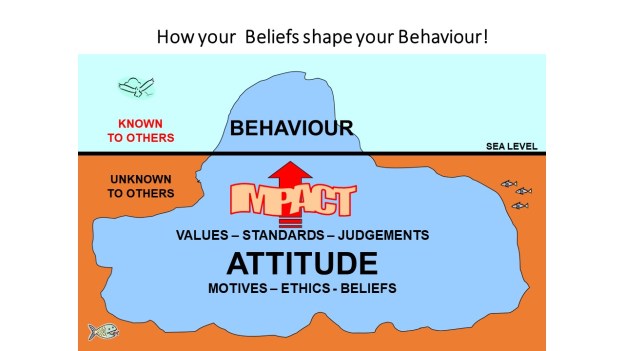
As indicated in the figure, the behaviour displayed that is visible is like the tip of the iceberg. What might be the attitude, belief or paradigm underneath ( and thus invisible) such words?

  1. Legacy of the colonial mindset: On similar lines, It was customary to address the judge as My Lord by the lawyers, the practise which has been slowly dispensed with.
  2. Shift in Power structure: As a salesperson when you address the other person as Sir/Madam, you are handing the control to the other person by putting him/her on a pedestal.
  3. NLP Perspective: The basic premise of Neuro-Linguistic Programming, NLP is your body physiology ( neural system -N  which include your posture, breathing rate and the way – shallow, normal, or deep, eye contact, the skin resistance etc.) is determined by thoughts/belief system and by  the words ( Linguistic – L ) you use. The NEURAL affects the LINGUISTIC and vice versa. Both simultaneously run a specific behaviour pattern which becomes your dominant behaviour which is the programming (P). The eye contact is evasive; the voice tone being less confident, displays the obsequious and the servile approach of the salesperson. Is it fair enough to assume that by  addressing someone as Sir/Madam by default, the salesperson has already lost half the battle?
  4. Less Effort: When you address someone as Sir/madam; the salesperson  does not have to take any effort in asking as well as remembering the full name of the customer.
  5. Low Self Esteem: The salesperson feels he/she is the prime beneficiary in a business  transaction by collecting the order, which in turn helps him in reaching the sales targets leading to a low self-esteem.

If the customer were to be  God, does he behave the same way while negotiating hard on the price and the payment terms?

Is there a better way of addressing the customer  by his name? The conventional norm is either prefix Mister with the Surname, or address by the first name. For example, while meeting a prospect say, Ramiah Daniels, you may say, “would you prefer to be addressed as Mr. Daniels, or Ramiah?” I doubt  the customer says, ”you better address me as Sir.”

There are several advantages when you address the customer by name:

  1. Confident Behaviour: Your body language, eye contact evokes confidence. Your handshake is firm.
  2. Respect from the Customer: The customer reciprocates with  similar respect to the salesperson.
  3. Improved Customer Engagement: You may be able to connect with the customer when you listen to his full name carefully. Almost a decade back, I was having a meeting with one Mr. Reginald Borges who was the GM at APW president then.  When enquired about his relationship with Dr. Ernest Borges he said, “ Happens to  be my distant uncle.” Incidentally Dr. Ernest Borges was a renowned  cancer surgeon at the Tata Memorial Hospital in whose memory a road ( at the beginning of a 2-km stretch in Parel) has been named.
  4. Higher Self-Esteem: Remember, in any business transaction, the customer also enjoys the benefits of the products over a long duration which can help a salesperson raise his  self-esteem.

Is there  anything wrong in addressing someone as Sir? Not at all- if you are meeting someone reverential, exceptionally talented or to whom you have great admiration and respect, please follow your natural instincts.

Barring the above exceptions, is it possible to inculcate  the Ritz Carlton philosophy while interacting with regular customers:  ‘Ladies and Gentlemen serving ladies and gentlemen?’

P.S.To explore more such learning insights visit: Value-Selling for Premium Products and Solutions commencing on 11th January 2022

Have you found your niche?

“Charles, you care for nothing but shooting dogs and rats; you will be a disgrace to not only yourself but to your family too.” This was a father’s prophecy about his son. The father wanted his son to be a doctor like him. Charles entered Edinburgh University for medicine at his father’s behest, found it unattractive, later joined Cambridge, and earned an undistinguished bachelor’s degree in theology. He had no firm idea what to do. Charles was an aimless youth at 22. He wanted to do something different. He loved flora and fauna but did not know whether that love could be transformed into a livelihood.

Captain Fitzroy on his ship HMS Beagle was looking out for a naturalist. Charles asked for his father’s permission. His father refused but with a caveat, “If you can find any man of common sense who advises you to go on the discovery, I shall give my consent.” Neither the father, nor the captain were ready to grant permission to Charles.

There are two approaches of developing one’s career, the conventional approach and the niche-based approach.

  1. The conventional way of selecting a profession for self or for others is primarily decided by the demand for that profession, coupled with tangibles like salary and perks. No wonder Medicine, Engineering and MBAs among others make the cut.
  2. A niche-driven approach on the other hand is decided by differentiating oneself from the crowd by focussing on a niche . It is defined as a comfortable or a suitable position in life or employment. Alternatively, it also means a shallow recess especially in a wall to display something of value – a statue or other ornament. (please refer the image). Let us see what happened to Charles, the aimless youth discussed earlier?

When Charles approached Captain Fitzroy, the physiognomist in Captain Fitzroy said, “I doubt anyone having a nose like yours can possess sufficient energy and determination for the long voyage.”

His uncle drove thirty miles to convince Charles’ father to grant him permission to undertake the assignment on HMS Beagle as a naturalist.

The Beagle Voyage which included the circumnavigation of globe would be the making of the 22 year-old Darwin. Five years of physical hardship of mental rigour imprisoned within the ship’s walls, offset by the wide-open opportunities in the Brazilian jungles and the Andes Mountains, were to Darwin an eye opener in finding his muse. It took him 22 years to publish his theory of Evolution by Natural Selection in The Origin of Species.

Is it necessary to be a school or a college topper or those in the top percentile rankings to find one’s niche? Quite often the converse is true as ‘brilliant’ students have the best choices in selecting the conventional options in career and institution.

What can happen when one selects a career in a conventional way but is at the bottom of a pyramid in a specific career stream? Getting a job may look easy but one may be competing with a very large number of aspirants. For example: Rakesh had scored 100/100 in Sanskrit in SSLC. Having felt he had a flair for Sanskrit he decided to pursue his college education in that direction. He completed his BA in Sanskrit from Ruia College in Mumbai.

At this juncture he had two choices in further studies – to continue his studies in Sanskrit or look out for a qualification which is marketable in the job market. He decided to pursue a MBA in Finance instead. After spending around Rs. 8 lakhs in fees itself what can be the likely scenario when he passes out two years later?

For a person who wishes to do a M. Tech in Structural Engineering, a minimum qualification of B.E Civil is necessary. Likewise for a M.S. in surgery, a basic qualification of MBBS is mandatory. So, when a person pursues a MBA in Finance with Sanskrit as graduation the basic competency level expected of the student is that of Class 12th, as a MBA is agnostic to one’s field of graduation.

Conventional wisdom says that one has a wide range of job opportunities after doing a MBA. The opportunities are large but so is the competition. Annually about 360,000 students graduate from 4000 B-Schools of which 61% are unemployable due to skill gaps and low work experience.

Keeping those depressing numbers aside, can Rakesh compete with students from Premier Institutes or those with Engineering and Commerce backgrounds? It is not impossible, but it is a Herculean task.

What would happen if he were to pursue Sanskrit for his PG? In the absence of clear data let us assume that the number of students opting for Sanskrit may be 1% of MBA students that is around 3600. For Rakesh it would have been much easier to be in the 95th percentile after his MA and in the 99th percentile with a Ph.D. A lot of research happens in Sanskrit in US and German universities. By differentiating himself and finding a niche, Rakesh could have had a sense of purpose too.

From a financial perspective too, the cost of pursuing a MA in Sanskrit would have been at less than 10% the cost of a MBA. In case of a Ph.D. he could have explored UGC fellowships or opportunities in US or German universities where considerable research in Sanskrit is possible.

An example of a niche-based career is of my friend, Christopher Jayakaran who passed PUC, third class in 1962. With hardly any worthwhile career options, his father’s friend suggested him to take up a course in Geology. He completed his M.Sc in Geology at Presidency College in Madras by topping in the University. He worked for an NGO called ‘Action for Food Production’ for 7 years and for more than 25 years in different countries in Africa which include Uganda, Kenya, Tanzania, Sierra Leone etc. He is an eminent Hydrogeologist and a Paleontologist. His Tamil book In Search of Ancestors which is on evolution of man based on fossil evidence has run into six editions.

Why are people in general wary of pursuing niche fields?

  1. Obsession for Security: Education is normally pursued in order to get a job. The market demand is thought of. In the post-covid world there is no security either in a job or in one’s qualifications per se.
  2. Managerial Aspirations: Indians in general prefer to have a managerial title early in their career sacrificing expertise in a specific domain.

How to find your niche?

Around 30 years back, I came across an excellent concept in finding ones niche, based on cybernetic principles which was on identifying one’s core competency and focusing on a specific niche where the strength can be leveraged to maximum extent.

Werner Brandes was a German MBA Graduate who was working in a consulting firm but did not have career growth in spite of working hard in that organization for more than 10 years. He was unable to get good offers elsewhere. He was a mediocre student throughout his academic life and passed out from a tier-3 B-school.

The conventional wisdom of competing with others was not giving any results (like the example of Rakesh discussed above). His work profile was mapped for 15 different competencies. Werner was below average in all save one, which was on Industry Setup in rural areas. When Werner was pointed out that this was his niche. He asked, “How can I get a job with such a small niche?” He was advised to start his own consulting in this field and as he was in the top 5% of this ultra-specialized area of business consulting, slowly he was perceived as an expert in this field. Business started growing. Being a sunrise sector wherever the data was not available, his customers helped him in providing the necessary details.

Fascinated by this counterintuitive concept, I launched a program called Strategy for Quantum Growth. After 4-5 programs I had to withdraw as most of the participants did not want a long-term strategy but a new job which paid them 3-5K more.

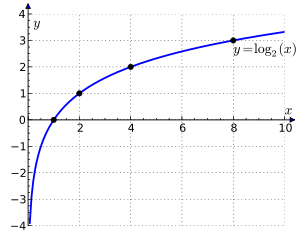
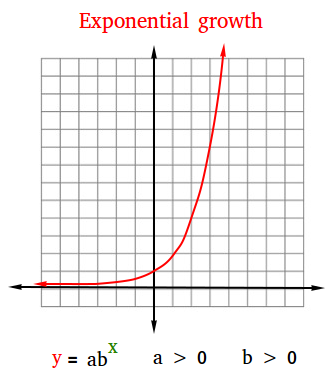
One crucial difference between the conventional and the niche-based strategy is the type of growth. In case of the former it is logarithmic growth – where it is easier to get a good well-paying job immediately after graduation but after a few years the growth may taper off. In case of niche areas there is a considerable struggle initially but after a few years when the market perceives you as specialist, the growth becomes truly phenomenal and is termed as exponential growth. ( Please refer the graphs below) You are considered as a pioneer and get a first-mover advantage.

Log_Growthexponential-growth

Conventional Approach                                                         Niche-Based Approach

Whether in business, profession or a job; there are some who go on competing  against  a vast majority in a commoditized market as if running on a treadmill and getting exhausted. On the contrary, the likes of  Christopher, Werner Brandes or Charles Darwin though not brilliant in their school days in the conventional sense were able to find their niche. Have you found yours?

Two roads diverged in a wood and I…and  I took the one less travelled by and that has made all the difference. – Robert Frost.

BATNA – The Tool to Improve Your Negotiating Leverage

“Rajeev, we have been given a mandate by our management. Due to the Covid-19 crisis leading to a steep fall in customer demand, you are expected to reduce the price of your cutting tools by 50%,” said Mr. Padmanabhan, (the purchase manager of Shockproof, a shock absorber manufacturing company from Delhi) adding a veiled threat, “else we have no choice but to switch over to the competition.” Rajeev is a technocrat running ‘Techno Enterprises,’ a MSME manufacturing cutting tools enterprise with a turnover of around Rs. 10 crores. When asked about the customer details, he shared that ‘Shockproof’ is a major supplier of shock absorbers with a turnover of ₹ 1000 crores catering mainly for the two wheeler industry.

One of the questions often asked in our training and consulting assignments is ‘how does one deal with such arm-twisting tactics, especially when the customer is too big compared to the supplier?’

One important concept in Negotiation theory is BATNA, which stands for the Best Alternative To a Negotiated Agreement, a term coined by Roger Fisher and William Ury of the Harvard Program on Negotiation. BATNA is an important tool while preparing for negotiation. Both parties have their BATNA independent of each other. The party having a stronger BATNA has a stronger negotiating leverage. In case the parties are not able to conclude the negotiation, the best option each one has can be called as their BATNA. In the above example, if the negotiations fail, the BATNA for the customer and vendor can be improved as follows:

Customer: Look for other vendors who can give a similar product at the desired price.

Vendor: Develop alternate customers who can provide the requisite amount of volumes at the desired price.

It is not as simple as it looks above. Does the customer have a vendor who can provide deliveries just in time to meet his production targets? Alternatively, does the vendor have alternate customers where his current inventory can be offloaded? Now you will appreciate that BATNA is not only decided by the number of options but also the feasibility and attractiveness of those options.

Whose BATNA is stronger? The conventional answer favours that of the buyer who is much bigger in size. Some points to ponder:

  1. Identify your BATNA: The tool required for cutting/drilling is made with precision which requires tungsten carbide or diamond as the raw material. It also requires a great deal of R&D to develop a tool for a specific application. The vendor has been supplying the tools for the last 15 years. With considerable technical expertise, the production department found the tool useful. The rejection rate was less than 1% and the cost-per-component was low.
  2. Identify the weakness in the other party’s BATNA: The seller knows that the buyer has the option of other vendor but also has the critical information that the rejection rate of the competition’s tool is close to 50%. Also, the shop floor people do not appreciate the tools supplied by the competition.
  3. Spot the customer’s bluff: Even though the Indian two-wheeler volumes fell by 15% in FY 20, the impact on Shockproof was much lesser at around 8.4%. The customer was able to absorb the shock (pun not intended) as it focussed more on improving the content per vehicle. As per a newspaper report, Shockproof had notched up a top-line of ₹ 5000 crores and its EBIDTA rose by 4% to Rs. 800 crores. (Remember the excuse of the Covid -19 crisis the purchase manager articulated earlier?)
  4. Do Proper Homework: Rajeev shared that the customer’s turnover was ₹ 1000 crores, whereas in reality it was 5 times. This can be perceived two ways: conventionally it may produce a feeling of helplessness. Alternatively the helplessness could be transformed into strength as in the end result of a David vs. Goliath fight. The vendor could feel that a supply of ₹ 1 Crore of material is insignificant from the customer’s perspective and there need not be any need for the customer to be so aggressive in reducing the price. Can David stand his ground?
  5. Improve your BATNA: Let us take a different example where both the customer and the vendor are equally strong. For its Power PC, Apple had developed its microprocessor in collaboration with Motorola and IBM. In 2005, Steve Jobs took a call to switch over to Intel, which apart from being a market leader in microprocessors was offering a cutting edge technology in computing. Developing microprocessors needs a huge investment and also technical expertise. Intel had both and was the only vendor for such a high-technology product. With a single vendor, the vulnerability was high for Apple.

Three years later, Apple bought over a 150-employee start-up in chip design called PA semi. Most of the team members had worked earlier at Intel, including Johny Srouji who now reports directly to Apple CEO Tim Cook. In 2020 Apple announced that it will use its in-house microprocessors for the new range of Macs.*

  1. Risk Mitigation: Apple was giving a business worth $3.4 Billion of microprocessors for Macs to Intel every year according to C.J. Muse an Evercore analyst. For Intel it was like losing a major account which was powering around 20 million Macs shipped by Apple annually. The impact of such a Key Account leaving Intel can be minimized when the figure is perceived not in absolute numbers but by the percentile share. Apple was contributing to 5% of Intel’s annual business and the total no of PCs sold annually are 260 million.

While understanding one’s BATNA, apart from the actual value an account produces, the share of the total business also needs to be considered. It is better not to keep too many eggs in too few baskets. An important tool in risk mitigation is the sales funnel which can help in improving your BATNA.

  1. Guard against Pitfalls while analyzing one’s BATNA: There are two mistakes people make while going in for negotiations. Either they are too optimistic or too pessimistic.

Being too Optimistic: There is a tendency to aggregate all the options and assume it to be The BATNA. Consider for example, Rajesh, an unemployed engineer in Bangalore who has applied for a job in IT and feels that he deserves a salary of Rs. 10 lakhs as he has the following options:

  1. Has applied for similar jobs in Mumbai and Delhi.
  2. Has plans of a start-up in 3-D printing.
  3. Is exploring further studies in the US by answering GRE and TOEFL.
  4. Is pursuing MBA by giving CAT.
  5. Joining the family’s 2-decade old fabrication business which is running well.

It is risky to assume the sum total of all these options as the best alternative because at any moment Rajesh can select only the best one. Contrast this with Gautam who already has a job with a ₹8 lakhs CTC. You will appreciate that Gautam has a better BATNA than Rajesh as a bird in hand is worth two in the bush!

Being excessively Pessimistic: The other mistake in negotiation is being too pessimistic when one is too committed to reaching an agreement without any preparation. There is an assumption that agreeing to all of the customers’ demands will make him happy, giving rise to a long-term business and relationship.

In the cutting tool example, the vendor though small in size vis-à-vis the customer, had a better product quality, a low rejection rate, a lower component cost and a shorter delivery period vis-à-vis the competition, which meant him having a better BATNA than the customer. Does it mean that he should rest on his laurels? Competition will be always trying to catch up with him, which necessitates him having to improve his BATNA all the time so as to keep the competition at bay.

Thus, negotiating strength, rather than being decided by the absolute size of a party or the size of the deal (as in Apple vs. Intel) or the number of back-up options, is decided by your BATNA.

Whether you are a buyer or a seller, starting a new venture or looking out for a new job opportunity, please spend time in identifying and developing your BATNA.

Remember, in life, you do not get what you deserve, but what you negotiate and that is decided by your BATNA, the Best Alternative to a Negotiated Agreement!

(* International Herald Tribune, Don Clark and Jack Nicas – After 15 years Apple prepares to break up with Intel DH – June 23, 2020)

Webinar on Skillful Negotiation; Wednesday 11th May 1000 HRS IST

Acquiring New Customers through Contextual Selling

Thursday, 25th June 2020 at 11 AM (IST)

Perspective: The success rate in conventional cold calls is less than 5%. Thanks to internet and with easy availability of information coupled with Covid-19 crisis, your potential customers are wary of meeting unknown salespeople; whether on-line or in person.

When the competition is a mouse click away, retaining old customers becomes a challenge. However it is only through new customers that organizations and salespeople can hope to achieve growth. The practical webinar will show you not only the roadblocks but also powerful techniques to reach out to new customers!!

Major Themes:

  • Shift in  Customer Loyalty due to multiple vendors
  • Imperative for Continuous acquisition of new Customers
  • Business Etiquette while selling ON-LINE and in person
  • Why are new prospects wary of talking to unknown salespeople?
  • Stereotypes associated with Salespeople  
  • Breaking the stereotypes through Trust & Rapport Building
  • Intent, Competence and Commonality: Toolkit to enhance Sales call success
  • Role of reference and recommendations in acquiring new customers

Resource Person: Rajan Parulekar, B.E. (Electrical), MBA

  • Author of Contextual Selling®: A New Sales Paradigm for the 21st century
  • Completed Enhancing Sales Force Performance program at IIM-A in February 2013
  • Trained around 15,000 managers and sales executives from 1000+ companies since 1995.
  • Conducted programs for culturally diverse groups in India, Malaysia, Singapore Sri Lanka, Qatar, Muscat, Bangla Desh etc.
  • Best Sales Performance in Asia award while working for Wiltron USA in 1990
  • Winner of International Taped Speech Contest by Toastmasters Int’l  USA in 1997
  • Worked with Larsen & Toubro, Wiltron and Toshniwal in Sales and Marketing
  • Advanced Toastmaster (ATM) certified by TMI USA.

For Whom: The program is recommended for sales executives selling high-value products, services and solutions from Automobiles, Engineering Products, Chemicals, capital Equipments, Electronics, Telecom, IT ( Software and hardware) sector. The program may not be suitable for OTC/FMCG sales.

Investment: Rs.1950/-, US$ 40 per person.

Payment Mode: NEFT/Credit card/Google Pay: +91 98802 36793/PayTM: +91 98450 14098

For details : contact : rajan@paradigm-info.com, madhura@paradigm-info.com

WhatsApp: +91 98802 36793/98450 14098

Paradigm Trainers Private Limited| https:// http://www.paradigm-info.com

Reason and Excuse: The Crucial Difference

Amit, a participant who had attended my sales training program around four years back called me over phone two days back.

A: Sir, I am working for a small  Indian company selling Test and Measuring Instruments (TMI) What is the secret that our competitors, the giant multinational companies, go on consistently getting orders from customers beating us all the time? I know they have technically superior products. But are their sales engineers likewise?

I: Amit: such companies not only have a good product range but also have a systematic sales and a training process.

A: Now I understand why the salespeople from MNCs are so good.

I: But is that your real question? What is bothering you?

A: My main worry is, how do I improve my order booking performance? I am not sure of my job in these difficult times.

I: what is the reason?

A: I come from small town called Akola, working in a company which does not have a great brand. On top of that, our company does not spend much on training either. I am so passionate about attending training programs and learning new things.

I: You said you have attended my training program four years back. After attending did you ever felt like clarifying your doubts or getting new insights from the trainer?

A: No sir, I was extremely busy with my work.

I: Did you ever get time to refer to the course material?

A: No sir.

I: You said, your company does not believe in training, but you have attended my program.

A: Yes sir, that was an exception.

I: If I am not mistaken, along with the course material, I had presented a copy of my book Contextual Selling?

A: Yes Sir, I have started reading the book now. It is quite interesting.

I: After four years?

A: Now I am having some time. All these days there was absolutely no time.

I: Did you pay for the training program?

A: No sir, the training program was sponsored by the company, and the course material as well as the book was a part of it.

I: So you did not buy the book either!

A: Sir that is OK, being from a small town, I have an inherent disadvantage compared to my counterparts from competition who are from metros. They have all the exposure and opportunities.

I: Out of the three legendary Khans in Bollywood, who have the advantage of lineage and pedigree?

A: Obviously it is Amir and Salman.

I: Anyone who did not have such an advantage while entering the industry?

A: I think it was a Shahrukh.

I: Any other examples you can think of who have made it big and carved out a niche?

A: Irrfan Khan, what a great actor he was!

I: Anybody beyond the Khans?

A: I think of Nawazuddin Siddiqi, Ayushman Khurana etc.

I: You said you belonged to a small town which was your main disadvantage. Can you think a of a cricketer from a small town and still made it big?

A: Is it Dhoni from Ranchi?

I: You are right. Which year did you complete your engineering?

A: In 2008.

I: Did you attend any training programs or self-development activities for the last 10 years?

A: No

I: Did anyone prevent you from attending such programs?

A: No. But I feel training the executives should be the responsibility of the company.

I: Why?

A: Ultimately it helps to reach the company goals.

I: Do you have monthly, quarterly, and annual targets?

A: Yes.

I: Do you deserve to get your commission, incentive or bonus (whatever is applicable) if you were to reach your targets?

A: Certainly

I: Do you feel good quality training can help you improve your sales. Negotiation and communication skills?

A: Yes.

I: Amit, in that case, can you see that you also need to take responsibility for your development.

A: I can see your point.

I: Let us look at a concept of Locus of Control.

Locus of control states that the degree of stress perceived by a person depends on the control (or the lack of it) that he/she has on the situation. The cause of the stressor may be seen as stable or unstable, global or specific, and internal or external.

1.Stable and Unstable causes are enduring and temporary, respectively. My competition is always going to have an upper hand is an example of stable interpretation.

2. Global and Specific causes are relevant to many events or to a single occasion, respectively. E.g. Competition products are technically superior, is an example of global interpretation.

3. Internal or External causes indicate personal characteristics and behaviors or the result of environmental forces, respectively. E.g. I feel inferior because I am from a small town and not trained is an example of internal representation.

The more stable and global the cause of a stressor seems, the more people feel and behave as though they are helpless. Likewise, the more internal the cause of a stressor seems, the worse people feel about themselves. Together, these feelings and behaviors contribute to a depressive reaction to the stressor. Let us look at an example:

It is not advisable to take either of the extreme positions (Global or Specific, Stable or Unstable etc.) but should be treated as a continuum where a combination of both can be thought of.

Test & Measuring Instruments (TMI) range consists of products like Oscilloscopes, Logic Analyzers, Protocol Analyzers, Signal Generators etc. TekEdge was considered as a market leader in TMI in general and Oscilloscopes in particular. There was a small company called Le Croy which had some unique offerings in Protocol Analyzers.  However the company was much smaller to TekEdge. Analogous to David Vs Goliath battle, the Le Croy engineers while making an offer used to intentionally keep their price low vis-à-vis TekEdge offer.

A new manager called Santosh wanted to question the Global paradigm of TekEdge being superior in all respects. To one of his clients, he quoted a price which was $1000 more than the competition. When the customer questioned Santosh’s logic, he said, “even though my competition is big in the overall TMI market, my company has a unique advantage in the niche Protocol Analysers segment which is tailormade to your application.  Santosh changed his paradigm from Global to Specific and was able to close the order with a premium.

Another example: consider a  case where a  guy’s girlfriend breaks up with him and he thinks that his love life is always in the dumps (i.e., a stable interpretation), that nobody really cares about him (i.e., a global interpretation), and that he must not be a dateable guy (i.e., an internal interpretation). Such an interpretation could contribute to a depressive reaction, such as him coming to the conclusion that he might as well not try because there is nothing he can do about it and that he is pretty much a lost cause.

I: I hope you might have understood the concept of Locus of Control and that your interpretation (of your competition, your company, customers and yourself) being stable, global & internal was causing you considerable stress. Would you agree with that?

A: Yes.

I: I shall ask you three simple questions, One, what was your original problem?

A: Sir, my original or the surface problem was: What makes the sales engineers from competition so successful?

I: What was the actual or the fundamental problem beneath the surface problem?

A: How should I improve my performance?

I: What is the root cause?

A: I am lazy. What I felt as genuine reasons were excuses. I need to take responsibility for my development.

As human beings we go on telling a number of lies to others, but rarely do we recognize the lies we tell ourselves!

Rajan Parulekar, rajan@paradigm-info.com,