
Category Archives: Communication

What makes A Maverick stand apart?

“Shantaram, it’s high time you retire from the film industry” said Shankar Bhat, the owner of Prakash Pictures casually during a meeting of the Film Producers Guild. V Shantaram, the renowned director and the owner of Rajkamal Studios was taken aback. When asked for the reason he said, “Your last film, Zanak Zanak Payal Baje has been a blockbuster through which not only have you reached a pinnacle of success but the film is also considered as an epitome of creativity. You will never be able to repeat such a feat. Any subsequent film you make will be compared to this blockbuster.”

A few days later. G. D Madgulkar, a noted Marathi poet and writer narrated an experiment of an open prison and the rehabilitation of prisoners carried out by Maurice Frydman to Shantaram.

Maurice Frydman, a Polish Jew who came to India and was influenced by Mahatma Gandhi and guided the King of Aundh (Near Pune) draft the declaration for transfer of power from the king to the people of Aundh. It was during this process of giving self-governance to the citizens of Aundh, that a question came up about the prisoners. Frydman then took on the responsibility of taking care of the convicts in an open prison. An open prison is any jail in which the prisoners are trusted to complete sentences with minimal supervision and perimeter security and are often not locked up in their prison cells. Prisoners may be permitted to take up employment while serving their sentence. This provides an opportunity for criminals to reintegrate into society and withdrawal from their criminal behaviour. Without the constraints and stresses of typical incarcerations, criminals can discover more positive lifestyles through support and light supervision from the criminal justice system.

“It‘s a great plot, why don’t you make a preliminary draft on rehabilitation thro’ an open prison?”  Shantaram said to Madgulkar. After a few days while reading the draft, Madgulkar himself got bored and said “The story does not have enough material to convert into a full-fledged film. The subject is too drab and boring.”

Shantaram said,” But I see a great potential to make a classic film out of this narrative. No doubt we need to hone the script more.” Looking at Shantaram’s enthusiasm, Madgulkar had no choice but to accede to his demand.

The film Do Ankhein Barah Haath slowly started taking shape. The title connotes the eyes of the jailor and the hands of convicts. The storyline revolved around six hard-core criminals who have been jailed for heinous crimes like murder, arson, looting and rape. The conventional perception of the legal and the prison setup was to brand a convict as a life-long criminal without any scope for reform. The convicts were thus jailed in inhuman conditions typical of any jail. The protagonist of the film Adinath (played by V. Shantaram himself) feels that people irrespective whether they are criminals or not, are human beings first. There is a possibility of reform by putting them in normal environment like an open prison.

Adinath takes the permission from his senior, the Superintendent of Police (SP) to take these six convicts to a place with minimal monitoring. There are some challenging moments Adinath faces in this novel experiment. Once the inmates make a request to go to the nearest town. Adinath permits them with a caveat that they should return by the sunset. He goes through some anxious moments as the day comes to a close and gets relieved to see them back though a bit late.

The inmates are engaged in a daily routine of clearing the shrubs, digging well and plant vegetable. Within a few months the barren land is converted to a green area with fresh vegetables.  Adinath asks them to sell the produce at the village with nominal profit.  The local traders charging high rates till then get upset with the new competition.

The inmates do not return home in time. Adinath is perplexed about his decision on granting freedom. The inmates return late fully drunk. Adinath not only gets furious but also anxious about the outcome of his experiment. The next day he gets to know that the local trader has coaxed them in getting drunk and go berserk.Not able to digest the success of the farm, the local trader sends his goons and the bulls to destroy the crop. While making a valiant fight with the bull, Adinath breathes his last.

The SP who was initially a sceptic of this experiment, is now fully convinced of the transformation Adinath had brought about in the convicts. “You have served your sentence and are free to go back home.” Says the SP. The inmates decline the offer and decide to continue the work as inspired by their mentor, Adinath.

What made V. Shantaram take on such a challenging film? The seven types of motivators which define a creative personality are Pioneering Motivation, Self-Actualization, Altruism, Career Success, Hedonism. Security Motivation and Affiliation. (1)

Out of the above, the Pioneering Motivation, Self-actualization and Altruism need to be very high; Hedonism and Career Success need to be moderate and the security and the affiliation motivation need to be low for a creative personality.  

Pioneering Motivation: Do Ankhein Barah Hath was an off-beat, black and white movie sans glamour with no tricks of the trade like love triangle, expensive sets, or iconic stars.

Self-Actualization: When Shankar Bhatt asked him to retire after the phenomenal success of Zanak Zanak Payal Baje, Shantaram questioned himself and his own identity and the purpose of life. He decided not to rest on the past laurels.

Altruism: The protagonist Adinath believed in the inherent goodness of people He sacrifices his life to help the prisoners let go of the past.

Security Motivation: His scriptwriter told him that the plot was too mundane and there is not much drama to make into a full-fledged film. Shantaram thought otherwise. He looked at the worst case scenario. His earlier film Zanak Zanak Payal Baje  was a runaway hit. Shantaram was willing to write off even if this film were to flop at the box office.  .

Career Success: Intuitively Shantaram knew that the film will come out well and will be appreciated by the audiences. He did not get into the success trap of comparison with the  success of his preceding films. In a way he did not become a prisoner of his past success!

 Affiliation: This motivation is to tread the beaten path and need to be very low for a creative person. Madgulkar who was asked to write the screenplay got bored while narrating the first draft. Shantaram did not give up.

The film was premiered at Opera House in Mumbai on 27th September 1957. It was attended by the staff of Rajkamal Studios, friends, relatives and acquaintances of V Shantaram along with celebrities from the Bombay Film industry (now Bollywood). Even if the film were to be a disaster, audiences would make kind remarks about the film’s success out of courtesy. But the scene was quite different. Forget an applause, there was a total silence. Vijay Bhatt, a film a producer said, “You have said something different in this film.” Save this remark, there were hardly any comments. One could hear people whispering: had it not been for V. Shantaram, the film would hardly run for 5-6 weeks. The film reviews in the media were more towards criticism rather than praise. (2)

Do Ankhein Barah Haath ran for 65 weeks in Opera House and proved the naysayers wrong. The then Mumbai Police Commissioner had issued an unofficial dictum making the film mandatory for every policeman.

Ae Malik tere Bande Hum’, the prayer song was played in many schools and jails across the country and also in Pakistan. The film won the Best Film and the Best Direction award from the Govt of India. It was honoured with the best Foreign Film Award in the Berlin Film festival.

V. Shantaram wanted to acknowledge the contribution made by Maurice Frydman by including him in the film credits. Maurice flatly refused. 

The black-and-white film had no glamour, a drab subject and an idealistic protagonist.  Madgulkar the scriptwriter, the Staff at Rajkamal Studios, the celebrities of the film industry, or the media; none of them predicted a decent run for the film, leave aside the commercial success or the critical acclaim. Shantaram swam against the tide and showed what it means to be a maverick.

As someone has said, “if you can visualize the invisible, you can accomplish the impossible!”

References:

  1. The Fourth Eye – Pradip Khandwala, the seven indicators of creativity are discussed in detail. The different levels of motivation be it high, medium or low can be understood through the questionnaire. Blockages to creativity and the ways to enhance are also discussed.
  2. Ten Classics – Anita Padhye

Good and Great Communication

“This is our drawing room; this is the balcony and these are the wall-to -wall wardrobes.” Shantanu, a software engineer in his early 30s was explaining to his guests as I was ushered into his new 3-Bed room apartment. The Rs. 2 Cr+ plus apartment in an upmarket gated community was fitted with Italian marble, top end interiors and Alexa activated controls. As the show-around during the house-warming ceremony was taking place, I got lost in my thoughts recollecting of a person who lived a simple life in a single toom laden with books in National College, Bengaluru. H Narasimhaiah, affectionately called as HN, was a physicist, educator, writer, freedom fighter and a rationalist from Bengaluru.

Circa 2010, I was attending a training program on Effective Presentation Skills in Indian Institute of Science (IISc), in Bengaluru. There were eminent speakers and motivators which included Toastmasters who demonstrated the various facets of presentations and the techniques in using PowerPoint. There were around eleven speakers. By the time the last speaker’s name was announced; the auditorium was almost empty. It was around 5:15 PM and the last speaker was Ashis Dutta, the CEO of CCE Software Private Limited who was to speak on Developing Business in Europe. CCE Software had a good presence in Germany then. Ashish was talking in a simple conversational manner without any histrionics, voice modulation or an attempt of playing to the gallery. (There were a few listeners even otherwise in the auditorium.)  and I still recollect the last slide which said, There is no Europe. The presentation though simple to the core, conveyed a powerful message that Europe should not be taken as an entity without factoring the differences among its member countries. For exploring business opportunities, a one-size-fits-all approach may not be appropriate. Even after a decade, I still remember that presentation which was given at the fag end of the day without any fancy bells-and-whistles of PowerPoint. I do not recollect the previous speakers who were flamboyant and more eloquent vis-à-vis Ashis.

Subsequently Ashis and I became good friends. On 5th September, Ashis sent me a message about the speech which made a lasting impact on him. Thirty years back when he came to Bangalore, he heard H Narasimhaiah (HN) at the Rotary club. It was a speech straight from the heart delivered in a soft tone without any rhetoric or flamboyance. What touched him the most was HN’s simplicity, ethics and the values he lived by.  

HN, when he was 15 and being from a poor family, had to walk around 85 kms for two days from Gauribidnur to Bengaluru to take admission to National School in 1935. The next year, Mahatma Gandhi was to deliver a talk in Bangalore. The school principal selected HN to serve as an interpreter for Mahatma Gandhi to translate his talk from Hindi to Kannada. That one speech served as an inspiration for HN to adopt the Gandhian way of life.

After doing his MSc in Physics, he went to the USA and earned his Ph.D. in Nuclear Physics, came back to India and was the principal of National college from 1961 to 1972. Later on, he was the Vice Chancellor of Bangalore University. He was also known for starting the Bangalore Science Forum in 1962. He was a rationalist to the core and with Abraham Kovoor, challenged the godmen like Sathya Sai Baba, Sai Krishna and exposed their ‘miracles’. He was awarded Padma Bhushan in 1984.

What is the difference between good communication and great communication?  Normally good communication includes techniques like defining a proper structure with powerful opening, meaningful content and a memorable end to factor for the primacy and the recency effect of the human mind. The speaker also needs to have energetic voice with clear articulation, modulation, speaking rate and the right pause in emphasising a point. The body language also plays a critical role. Power Point presentation with the right font size, key points without cluttering with good contrast, animations etc are also relevant. The purpose of good communication in short is to impress the target audience and achieve the desired results; be it the closing of an order or attract funding for your business venture.  A great communication on the other hand does not have any such rules; its purpose is to express your being. Good communication is goal-based. Great communication is beyond goals and may help you find a purpose.

Good communicator knows that people forget 50% of the contents after a day and 80% after a week and thus need to use mnemonics like AIDA (Attention, Interest, Desire and Action) PPF (Past, present, Future) etc. On the other hand, Mahatma Gandhi after addressing a rally in Bengal was asked about his message. He said, “my life is my message.”

Circa 1985, after watching Attenborough’s Gandhi four Australians, quit their jobs and decided to work in the Chennai slums.

Post the training program, my participants may not remember what I said a day before. But I remember what Ashis said a decade back; he recollects what HN conveyed three decades and for HN, his one meeting with Mahatma Gandhi made all the difference for his life!

HN said, “a mediocre teacher confuses, an average teacher explains; a good teacher teaches and a great teacher inspires. “

Image Source: https://www.neskarnataka.edu.in/narasimhaiah/

Do we mean what we say?

“The Galaxy Z flip 5 is ONLY Rs 99,999/ said the salesman at the mobile counter. Being a latest product from Samsung, we can work out a special price for you with an exchange of the old mobile additional upgrade bonus and extra bank cashback…”

While the salesman was rattling off the technical specifications in his sales pitch; I got stuck at the word ONLY.  What happens when people use the word ONLY, is it something to convey or to hide?

Jacob and Isaac were two religious Jews living in an apartment complex with their balconies facing each other. They  had not fasted on the Yom Kippur day, the day of atonement. They went to the Rabbi to ask for forgiveness. The Rabbi replied that it is possible only through observing a penance.  He asked both about what they liked the most. Jacob said, “sharing the marital bed with my wife.” Rabbi said, “Jacob, for the next three weeks, you shall be sleeping in a separate bedroom.” To the same question, Isaac replied, “smoking a cigar.”  Rabbi said , “likewise you are not going to smoke a cigar for the next three weeks.”

One night, Jacob’s wife knocked on his  bedroom door. Jacob said, “Darling, it is ONLY the third day. We are not supposed to be together for the next three weeks.” His wife said, “ I ONLY wanted to tell you that Isaac is smoking a cigar.”

There are many undesirable thoughts and images which are in our subconscious mind which try to escape into the conscious mind. The way the word ONLY is used is to push back the undesirable thought coming into the consciousness. You may see that from the bottom of their hearts; both Jacob and his wife wanted to be with each other; but by using the word ONLY; were trying to repress the desire. Rationalization is a process by which a person justifies his action by hiding the real intention. As Voltaire said, ‘men use thought only to justify their wrongdoing and speech only to conceal their thoughts.’

Another example to illustrate the point: While having dinner with my mother-in-law; she said, “Rajan, is the curry over?” I replied, “No, the dal fry is still there. Do you want me to serve you?” She said, “ I ONLY wanted to see whether the fish curry is over or not.” My mother-in-law being a strict vegetarian; finds it difficult to hide her consternation of someone partaking of a non-veg dish while having her meals. You may observe the word only conveys, ‘for heaven’s sake, when will the curry get over?’

When a salesman is telling you that a product costs ONLY  Rs 99,999/- what he wants to tell you is that the mobile is economical and value-for-money (as conveyed by the management).What he wants to hide is his personal opinion of the product being expensive. If you are a seller, use ONLY during order closing;  but if you are a customer; beware of the trap laid down by the seller. 

“Sir, would you like to go for this model?” the salesman interjected. I was taken aback from my reverie of hidden meanings behind the words. “By the way, you shall also get a rebate of around Rs 30,000 on your old mobile; though for specific models.” He added a caveat. When he saw that I was using a Samsung Galaxy A12, an economy model costing only Rs. 12,000, the salesman was in a rude shock. I could see a tapestry of anger, frustration, pity writ largely on his face. “Sir I ONLY need to take this urgent call and shall be back within a minute.” I knew he would not turn back so soon.

So next time when you hear the word ONLY be careful: is your colleague trying to hide more than what he wishes to convey? As someone said, “statistics is like a bikini, it conceals more than it reveals.”

Alienation and Overdependence on Technology

Last week I had a pre-training meeting with a manager from a MNC having its office in a premium co-working space in Bengaluru. The reception was automated wherein visitors had to key in the details through a tab. I was told by the receptionist that the concerned manager has neither put a request for a visitor nor his name is in the approved client list. As a result, the access gate could not be opened. I spoke with the manager over phone who later came down and escorted me to his first-floor office.

Two days later he sent me a calendar invite for the training program which was scheduled at 9.00 AM in the boardroom at the ground floor. I reached the venue at 8.30 AM. This time I could overcome the first hurdle and get past through the access point. However, the boardroom door could not open. I was told by the security officer that manager of the co-working space Geeta was yet to come. At 8.50 AM Geeta turned up and said, “This is a fully automated and a state-of-the-art co-working space and the lights with LCD projector in the board room shall get activated only at 9.30 AM for which OTP from the registered mobile needs to be shared.”  “What do I do till then?” Geeta replied, “as a special case, I shall arrange to get the board room open, without lights though; you can be comfortable there or else you can occupy any of the workstations outside.”

My purpose of reaching before time was to check the connectivity issues with TV, LCD projector etc. For 45 minutes, I literally did nothing. A few participants tried to figure out chairs in the dark room. In fact, one of them had the audacity to ask, “by the way, is it a Value-Selling program or one on meditation?” Others loitered around for a while. With the OTP and the fully automated housekeeping program meeting their desired objectives, the boardroom came to life at 9.30 AM.

At 1.15 PM as the training program was in full swing, there was a power outage for a minute. Geeta was kind enough to say, “this is as per our protocol and you may face a similar outage at 4.30 PM just for a minute; but no need to worry.”

In his book Sane Society published in 1995, Erick Fromm has said that with the increasing use of technology, human beings are prone to suffer from alienation. A feeling of helplessness may creep into people without any scope of a free will.  Alienation happens due to Commodification and Abstractification. The former is a feeling of being used as a commodity and the latter is about equating life with numbers.

There are numbers which are put around every activity to determine whether you are efficient or not. If you are meeting your KRAs/KPIs you are in the system; else you are not. Even if you come by 8.30AM, the system does not care till it gets its OTP at a designated time of 9.30 AM.

All these years; preparing for a training program at a conference hall was a simple task. The door could be opened without access control; the lights could be switched on manually and the banquet manager deputed the housekeeping people for AC and other amenities.

Erich Fromm examines man’s escape into overconformity and the danger of robotism in a contemporary industrial society. Modern humanity has been alienated from the world of their own creation. Sane Society was published in 1995 and his predictions were prophetic.

All these years my main concern prior to any training program was about an alignment between the trainer’s preparation and the participants’ expectations. Now I am more worried whether I would be able to get into the conference hall before time and what happens if I were to forget my mobile or the battery gets discharged and unable to receive and share the OTP?

Adlai Stevenson (the former US Ambassador to the UN from 1961-65) has succinctly put it, ‘We are not in the danger of becoming slaves any more, but of becoming robots.’ (Sane Society-1955). With iOT, AI, and ChatGPT bundled into a smartphone, I am wondering who is the REAL robot after all!!

Blindspot and Bias

The opening slides in my Value-Selling program read as follows:
The main objective of the program is to help you improve the Top-Line and Bottom-Line performance. When the training program commenced the conversation between the trainer and the participants used to be on the following lines:
T: Is the objective clear?
P: Yes.
T: Do you need any clarification?
P: No.
T: Can I go to the next slide?
P: Yes please.
As I was getting similar responses from different batches, a few programs later, I decided to check my assumptions and asked the group:
“By the way, what do the two terms mean to you?” and most of the responses ( barring a few correct ones) were as follows:
Top-Line : meeting the top boss, closing the order, profits etc.
Bottom-Line: making a cold call, meeting a purchase executive, handling objections, achieving the targets etc.
With a simple profit-and-loss statement, the discrepancy between their response and the right answer was shown. When asked about the learning from the exercise, the response was that the top-line and bottom-line correspond to revenue and profitability respectively.

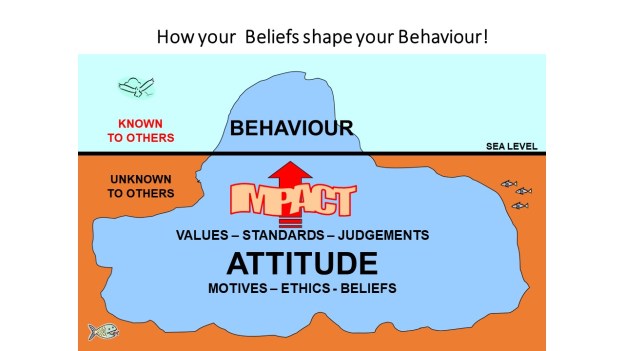
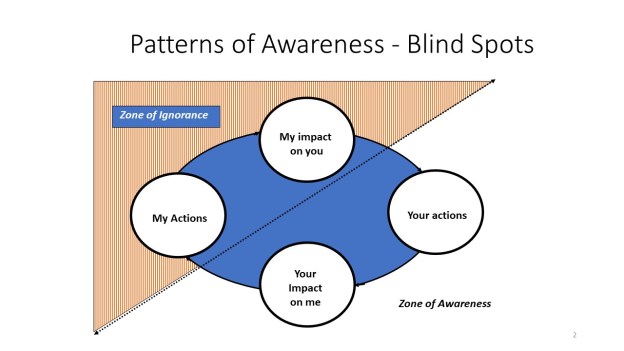
Welcome to the world of human biases, which are distinctive patterns of errors people make which are systematic in nature, wherein people may be confident even when they are wrong. The above example shows that people were not only blind to a specific concept ( top/bottom line) but were blind to their blindness too. (None of them said, I do not know)

A Chennai based petrochemicals company had set an objective to achieve a top-line of Rs. 500 crores within the next five years from the existing revenue of Rs. 62 crores in 2008.
When asked, the promoters replied that they have a basket of great products, competitive pricing, good location and a rising demand. What they did not factor were poor leadership quality (lack of trust and transparency, frequent squabbles between the CEO and MD,) high attrition rate, lack of proper systems and processes etc. External factors like the market dynamics, petroleum pricing, competition strategy etc were assumed to remain constant or were not considered while setting such a target. The company which had clocked Rs. 62 crores in 2008 managed to reach around Rs 115 crores by 2015 . As Nassim Nicholas Taleb says in Black Swan, ‘what you do not know is more significant than what you know.’

Till the 70s, it was assumed that human beings are rational animals who become irrational only under the influence of emotions like anger, fear. The subsequent research in neuroscience and psychology has proved otherwise. Irrationality is an integral part of human nature and is due to the inherent design of the human cognitive processes.

Another bias which affects decision making is the Illusion of Understanding; a variation of which is Illusion of Explanatory Depth–IOED which was coined by Leonid Rosenblatt and Frank Keil.
The illusion of explanatory depth (IOED) is the belief that we know more about the world than we do. When we are asked to explain the concept, then we become aware of our limited understanding.
Fact or process knowledge has a discrete end and can thus be described. Explanatory knowledge which is about opinions and beliefs does not have a discrete end and is difficult to explain. The interesting part is even if your explanation is not sound or comprehensive you feel you understand. You convert a target question ( difficult) to a heuristic ( easy ) question.
During one of our training programs, Pradip, a die-hard Modi Bhakt made a statement: Modi is a great leader. When asked to explain the concept he said, “ because he has many followers.”
T: Are you aware of the numbers?
P: It must be at least in crores; it is difficult to state.
T: A celebrity like a cricketer or a Bollywood hero also has followers in crores. Does it make them great leaders?
P:Forget that. He has performed well in short term and long -term.
T: What is your definition of short-term and term?
P: It can be one year and five years.
T: Did Modi get that time?
P: Yes
T: What are the indicators of performance, and do they indicate a good growth of economy?
P: Frankly speaking, I do not know.
The above is not only relevant for die-hard followers but also for bashers. Taking the converse of a statement, Modi is not a good leader, the basher may also be short of arguments after similar probing. The hatred and the polarization that is happening in the society can be reduced if we can get stumped by the level of our ignorance.

Generally, it is felt that passionate people are more knowledgeable, but the converse may be also true. Passionate people who take a vehement stand on issues like CAA/NRC, Rights of Minorities, LGBTQ, Religious Freedom, abortion etc. tend to focus on only one side of the coin which is essentially to prove a point rather than explore the truth. IOED states that knowledge of a subject might be inversely proportional to your passion and the stand you take. It is easy to state a fact or a process than explaining something in depth.

There is a thin line of demarcation between confidence and hubris. In the world of VUCA ( Volatility, Uncertainty, Ambiguity and Complexity) humility is more important than hubris.
I recollect my interaction with Narayanan, an eminent trainer from Chennai. I enquired about one of his public programs. “By the way, how did it go?” He said, “the program had to be cancelled due to poor response.” What might be the reason? He said, “frankly speaking I do not know. If someone were to ask me a question for a similar situation 20 years back; I would have confidently said the problem has to do with the timing, location, pricing etc. But today being in this field for so long; I do not know why some events succeed and some do not. However, such setbacks do not deter me, it is all a question of randomness which one must factor in life.”

Socrates made a clear distinction between knowledge and wisdom. A knowledgeable person maybe knowing things; however, he may act foolish as he may be too confident in what he knows. A wise person, on the contrary, cannot act foolish as he knows his limitations. He knows what he does not know.
Socrates said, “the one thing I know is that I know nothing.” This was not out of humility, but it was an expression of reality.

Snatching Defeat from the Jaws of Victory

Abraham Lincoln had no choice but to sack one of his army generals for losing a battle during the Civil war for his sheer stupidity when victory seemed almost certain. In his witty style Lincoln said, “He has managed to wring a spectacular defeat from the jaws of victory.”

Congress was the ruling party in Punjab with 77 out of 117 seats under the CM Amarinder Singh. The alliance of BJP and Shiromani Akali Dal (SAD) had 21 seats.

The alliance partner SAD parted ways with the BJP for the latter’s high-handed approach in dealing with its allies. Moreover, discontent was brewing  for long in Punjab due to the farmers’ protests, the bulldozing of the farm-laws in the parliament by the government, the  sudden lockdown during the pandemic which forced untold miseries  on the migrant workers.

Considering the weak opposition, victory was on the platter for the congress. No doubt, Captain Singh had his follies, he was not accessible there was discontent brewing in the party. But it could have been resolved amicably. But Rahul Gandhi thought otherwise. Navjot Singh Sidhu was thrust upon the state leadership. Captain Singh was replaced by a Charan Singh Channi who did not have much following in the state politics. And AAP created history taking its tally from 18 seats to a record of 92 seats. Is this an isolated instance of stupidity on part of Rahul Gandhi? (1)

In 2004, Manmohan Singh took over as the PM leading the UPA-1.Having completed his first term as the PM, the nation was ready for the Lok Sabha elections in 2009. What were his achievements?

From 2004-2009 the economy logged a growth of 9%, the highest rate for any plan period since independence. He stood up to the manipulations of the Left and the opposition in signing the Nuclear Deal between India and the US.

Despite these splendid achievements, the party high command had doubts of winning the election. Manmohan Singh’s photo was printed on the Election manifesto as well as on the election posters. If the party were to lose, it was the PM’s defeat. Incidentally, a Senior political journalist while speaking to Ahmed Patel confided that Rahul Gandhi was ready to be the leader of the opposition and be the agent of Change and differentiate from Dr. Manmohan Singh (2)

Lo Behold! After 1962,  Dr. Manmohan Singh had become the first PM to have been re-elected with an improved margin. Congress improved the tally of LS seats from 145 to 206. ( 9 more than what Rajiv Gandhi had achieved in 1989)

But then how was this Star Performer treated by the ‘family’? Was he given a free hand to choose his team members? For example, for the finance portfolio, Dr. Singh wanted to  induct C. Rangarajan, the former RBI governor with whom he had battled the BoP ( Balance of Payment) Crisis during the Narasimha Rao regime. Sonia Gandhi offered the portfolio to Pranab Mukherjee without consulting him. Incidentally, Pranab Mukherjee was the ‘architect’ of the retrospective tax regime ( the Vodafone case of Rs. 22,100 crores on Capital Gains and Withholding Tax which the GOI lost in the International Court at the Hague)  which was one of the factors of slowing down of India’s economy  growth rate. It also impacted India’s credibility in the international business (3)

By the time the Lok Sabha elections for 1996 were announced, the P.V. Narasimha Rao-led Government  formed by Congress had delivered one of the most  spectacular performances in a 5-year period then. India was able to overcome the BoP ( Balance of Payments)  crises. ( The foreign exchange reserves rose 12 times from 1991 to 1996) License Raj was abolished, the New Industrial Policy was launched, the insurance and the banking sector was opened to the private sector and the new telecom policy was to usher in the mobile revolution. In fact,1991 is termed as a watershed year, also called as India’s 2nd Independence.

But did the Star Performer who was responsible for delivering such an outstanding performance suitably rewarded? Forget being rewarded or being acknowledged, P.V. Narasimha Rao was humiliated not only when he was alive but even after his death. But did the Congress party or Rahul Gandhi win? Congress lost power despite the best performance delivered by the Rao Government. ( A forgotten Hero or a Ungrateful Nation?)

The three incidents discussed above prove the adage that insanity is doing the same thing repeatedly and expecting different results!

There are different approaches in helping the non-performing executives in improve  their deliverables which include coaching, mentoring, reprimanding or if nothing works, the dismissal. But then how do you deal with  star performers who are already doing well and need no interference? The cost involved when such a Star is demotivated increases exponentially when one is heading a department, an organization, or the nation. In the last instance, the damage is humongous. The article is not about Rahul Gandhi and his personality per se. but more about the orientation of a toxic leader. I come across a common refrain in my mentoring sessions that people do not change the organization but their bosses.

Do  toxic leaders like star performers? The question is not about liking and needs reframing. Can toxic leaders manage the star performers? I doubt as they are afraid of being surpassed by their subordinates which might be due to a deep insecurity and a trust deficit which increases in direct proportion to the subordinate’s achievement.

A concept called Wu-Wei can be helpful for effective leaders particularly in managing the star performers. Wu-Wei is loosely translated as ‘letting-go’ as followed in Tao-Te-Ching which denotes :

  1. An attitude of genuine NON-ACTION motivated by a lack of desire to participate in human affairs.
  2. A technique by which the practitioner may get a subtle control in pushing the envelope.

Some of you might have collaborated with good bosses  who practised wu-wei can consider yourself to be lucky. And those, the less fortunate (?)  in getting the toxic bosses- were you able to realize your potential by moving elsewhere or venturing on your own?

References:

  1. The art of snatching defeat from the jaws of victory – Capt. G.R. Gopinath ( Retd.) , Deccan Herald, 16th March 2022
  2. The Accidental Prime Minister- Sanjay Baru
  3. The Lost Decade ( 2008-2018), How India’s Growth Story devolved into Growth without a Story – Pooja Mehra

The Metaphor of Bicycle Thieves

Cycle, a Marathi film, is a story that unfolds in Bhugaon, a village in Konkan, Maharashtra, circa 1948. The protagonist is Keshav who is an astrologer whom people consulted mostly in times of distress. Keshav provided guidance about his client’s future by studying his horoscope. Quite often if the client were to be in financial distress, Keshav not only used to offer his services pro-bono but also partake of a meal with them. Being a kind and noble soul, Keshav had earned respect and goodwill in his community.

His grandfather, Gopalkrishna was an Ayurvedic doctor who was equally respected for medication and treatment of his patients. A British army officer, one such beneficiary of the doctor’s treatment; gifted Gopalkrishna his cycle while leaving India. Gopalkrishna during his final days bequeathed the cycle, distinct in its bright yellow colour, to his grandson Keshav, the protagonist of the story. 

The imported cycle was a rarity in Bhugaon, and Keshav was proud and possessive of it. Once when Keshav and his family go to watch a Marathi play, his cycle is stolen by two petty thieves, Vitthal and Tukaram. The next day, while riding in the adjoining village, the cycle develops a flat tyre. They go to the puncture shop for repairs, the shop owner recognizes the cycle and its original owner. To avoid any confusion, the thieves claim they are Keshav’s cousins and Keshav has lent the bicycle to them for a few days. Believing them, the shop owner refuses to take any fees for the repairs. On the contrary, he hands over ₹6 to the ‘cousins’ which he owed Keshav. Wherever these two thieves go, they were treated with exceptional hospitality, whether with meals, tea/coffee, or even with an overnight stay. At a school, they were invited as the chief guests, to deliver a motivational address to the students. With each passing day and with such touching incidents their conscience starts pricking. Initially, it was the fear of getting caught; but now it was the affection and love triggering guilt and shame.

In the meanwhile, Keshav was stricken with grief. The only thought which haunted him was why did he lose the cycle and how he can recover it. His wife entreats him to consult an astrologer who says, “Keshav, do you really feel I can tell you the whereabouts of your stolen cycle? People do not expect to hear the truth, but need consolation and encouragement about a brighter tomorrow when they seek counsel from an astrologer.”

While returning home, Keshav realized his approach as a soothsayer with his clients was no different. More than an astrologer, he was a psychologist, a counsellor telling people with encouraging advice like: this time is not right for youthis too shall pass, don’t get emotionally involved with things, do your best and leave the rest, handover your burden to the Almighty, he will take care of you, etc. 

Lost in his thoughts he came across a ramshackle house, walls cracked, valuables scattered all over and the rooftop blown over by a cyclone. To his surprise, he found the house owner quite composed. When Keshav enquires about the tragedy, the house owner says, “Last year when I was going through difficult times; I came to you for guidance, I still remember what you said then, don’t get stuck with things.” It was a moment of revelation for Keshav and his attachment towards his cycle. As a Zen master says ‘when my hut got burnt, I had a clear picture of the moon.’

Bicycle Thief by Vittorio Di Sica was released in 1948. Italy had gone through severe hardship post World War II and was plagued by recession, inflation, and a high rate of unemployment. The protagonist of the film is Antonio Ritchie, an unemployed youth for the last two years. After considerable struggle, he manages to get a job to paste cinema posters on poles and walls. Having a bicycle was a prime requisite for the job. Antonio manages to convince his quarrelsome but loving wife Maria to sell the bedsheets she received as a gift during their marriage, in order to purchase the bicycle. Now Antonio is all set to start his job with a bang. Within a short time, on the very first day itself, his bicycle gets stolen. Antonio is frustrated, runs from pillar to post, at last manages to trace his bicycle and nab the thief. However, nobody believes him, neither the people around, nor the police. And, for lack of evidence, Antonio is not able to regain his bicycle.

As he was walking along with Bruno, his 8-year-old son, he sees a bicycle parked alongside a wall. Antonio’s instincts get the better of him, and he attempts to steal it. To his misfortune, he gets caught and is given a sound thrashing. Bruno intervenes and saves his father from the matter getting worse. More than the thrashing, Antonio is hurt that he has cut a sorry figure before his son. On that fateful day, having lost his job, his bicycle, and his self-esteem before his son, Antonio was in total despair while returning home. Bruno while following his dad, picks up his father’s crumpled hat lying on the road; cleans and straightens it, and with a smile puts it on his father. 

Even though Bicycle Thieves by Sica was made in 1948, and Prakash Kunte’s Cycle in 2017, both films depict life in the late 40s. Italy went through the ravages of World War II, whereas India did not. The thief who stole Antonio’s cycle may have had his own compulsion, like Antonio who tried following suit.

The act of stealing a bicycle is shown from a different perspective, of how attachment to worldly things creates pain, of the pricking of their conscience, that makes Vitthal and Tukaram return the bicycle back in the village, even though not required. Keshav realizes his faith in the Almighty. He returns home with his retrieved bicycle, and he now keeps it afar. In his courtyard, he sees another bicycle. His family members and friends congratulate him for recovering the cycle. While touching the mudguard, he sees the yellow paint is wet. Everyone wants Keshav to be happy. The bicycle was just an excuse to make him happy.

One film discusses the inherent goodness, while the other is about the helplessness of people, which may be an outcome of their prevailing circumstances. Can we be judgemental about what is right and what is wrong? In a way, it is a story for all of us, where someone steals our idea or improves upon our original idea and does not give us credit for the original. In between black and white, there are multiple shades of grey. If you steal from one source, it is theft; if you steal from multiple sources, it is plagiarism or research. ‘Bicycle’ is just a metaphor!

Note:

  1. Bicycle Thieves: Is a 1948 Italian neorealist film directed by Vittoria De Sica. Considered as one of the Top 10 All-Time great films; it had  a major influence on Satyajit Ray, Shyam Benegal, Bimal Roy and Hrishikesh Mukherjee.
  2. Cycle: Is a 2018 Marathi film directed by Prakash Kunte written by Aditi Moghe and produced by Sangram Surve and Amar Pandit and was screened at Cannes Film Festival

Image Source: https://i.pinimg.com/originals/c5/6e/be/c56ebed6c368d900b30bded63548280e.gif

Relevance of Four Noble Truths in an Age of Uncertainty and Anxiety

The first sermon Buddha delivered after enlightenment was on the Four Noble Truths which are:

  1. The truth of suffering
  2. The truth of the origin of suffering
  3. The truth of the goal
  4. The truth of the path to the goal

Quite often it is felt that Buddha was pessimistic and was against the good things in life when he uttered the first noble truth that ‘Life is Suffering’ (Dukkha). It is not so. The term suffering can be interpreted in terms of day-to-day anxieties, irritations, etc. When we are all by ourselves, the thought of something missing, that we are not our ideal self, the current problems, start troubling us. The truth is: we do not think, the thoughts happen to us by default; without our choice. These random thoughts include the pain of earning a living, keeping the near and dear ones (and also the professional colleagues) happy, job uncertainties, etc. For those going through an existential dilemma, the pain of being me, the purpose of my life, Who Am I maybe also a part of constant irritation. The constant chattering of the mind from past to future is THE first noble truth, the truth of suffering!

How do we address this perennial irritation? We feel by working hard in our existing jobs or business, we may be able to address the uncertain future. Some people feel that the latest mobile or car may make them happy. Those with an intellectual/spiritual disposition of mind may resort to reading self-help books or attend spiritual retreat/personality development programs. People work on these different options hoping to calm their chattering minds. But beyond a superficial feeling of well-being, the pain resurfaces!

Do self-help books really help? In the US alone, self-help is around a $50 Billion industry. Despite being the pioneers in self-help along with the latest objects of desire, the country has an alarming crime and divorce rate, with a pervasive feeling of loneliness. Bhutan, a country without a commercial self-help industry is considered as one of the happiest countries. Incidentally research shows that people who are dependent on self-help books invariably tend to buy another book within the next 18 months! Paradoxically it is only the (fake) Gurus who make money, leaving their subjects poor, and the latter looking out for new techniques all the time! Our constant endeavour to drive away the pain either by acquiring new objects or self-improvement techniques is the root cause of suffering; the second Noble Truth.

After running on this hedonistic/spiritual treadmill for long; somehow the mind gets exhausted. You say to yourself: enough is enough, and stop trying! You accept the way you are; you accept your chattering mind. And lo behold, magic happens! There is a gap between consecutive thoughts. Your thought process slows down. Now you start seeing gaps, the emptiness between two thoughts, and you start arriving at peace with yourself. Your mind shifts from the past/future treadmill to the present moment! This is the third noble truth, the truth of the goal.

But these gaps are intermittent, ephemeral. If you start craving for the gaps, you go back to the first noble truth. The truth of suffering!

The media has conditioned us in making us believe that multitasking is good and that one should try to compress as many activities in the shortest possible time, which can make us productive and in turn lead to happiness. Nothing can be farther from the truth than this view. While watching TV, if a commercial appears, immediately we turn to the remote. We drink coffee while watching TV, we read a newspaper while having breakfast, and we WhatsApp messages during meals. We are trying to keep our minds busy to avoid the pain of the chattering mind. Most of these activities we do are in an auto-pilot mode: fingers on the mobile, with eyes on the TV screen, while sipping tea; but with the mind chattering at the speed of light about an important client meeting!

Let us understand the fourth noble truth, the truth of the path to the goal. Imagine you are making a cup of tea. Pour the water into the kettle, feel the sensation. Watch the water boiling and feel the steam and the warmth. Pour the tea powder into the kettle, smell the aroma of tea leaves in the boiling water. Allow the tea to percolate, watch your mind while pouring the tea slowly in the cup. Sit comfortably in your chair, and start drinking it with mindfulness. Observe the sensations at your lips, the tongue, and the way it travels down your food pipe. While doing this, you are in the present moment all the time and appreciating the tea with all the five senses: the aroma, the taste,  the colour, the warmth of the cup as well as sensation while tea is going down the gullet. When you perform every action in a similar mindful way, you are disconnecting the chattering mind and that is the fourth noble truth: the truth of the path to the goal! Practise even ordinary activities with total awareness and complete attention. Let it be choiceless.

All actions are intrinsically noble: sending a mail to a client or a WhatsApp message to a friend is in no way superior to cleaning the sink or washing the clothes! You do not have to outsource the latter activities to servants thinking them (both the activity as well as the servant) to be inferior! Every activity whether small or big, if done mindfully leads to salvation! And that is the truth of the path to the goal.

When we are multitasking with a chattering mind hovering in the past or the future, we are nowhere; acting like a zombie, no different than a robot – but perennially suffering. A robot in a way is still better, at least it does not suffer!

When we are doing one task at a time with complete awareness, we are in the present moment. That is the journey from nowhere to now and here, a paradigm shift from confusion to enlightenment! Be Happy!

Inspiring Leadership

My first interaction with Deepak Parab, the CEO of Metrohm India Private Limited (a leading company in Analytical Instruments and Solutions) happened around two years ago when he called me from his Chennai HQ and said that he would like me to conduct a ‘Managerial Effectiveness’ program for his pan-India team of service managers. “Rajan, I shall ask my National Service Manager, Vinod Salunkhe to get in touch with you to discuss the further modalities.” The call hardly lasted five minutes; a client taking a quick decision in finalizing a 2-day training program was a rarity in my training career of 25 years. I could not help recollecting a MNC client who took approximately six months with more than a dozen meetings to finalize a 1-hour keynote address. (See my earlier blog titled ‘A Tale of Two Key Note Addresses’ – https://rajanparulekar.in/2018/03/29/a-tale-of-two-key-note-addresses/ )

More than the ability to take the right decisions, the leadership traits I admired in Deepak were:

  1. Focus on results: After he took over as CEO and Managing Director, Metrohm India has progressed very well under him and results have been great. They have been able to capture and maintain major market share for their products and increase the turnover and profitability multi-fold. Today, Metrohm India owns all its offices across India and these were bought in the last ten years.
  2. Retaining Talent: His core team of 30 senior managers including the COO, Branch Managers, Service Managers, Application Laboratory Manager and Product Managers are with the company for the last 20 years. The core team has remained the same for the past two decades.
  3. Creating Value through Service: Peter Drucker said that the purpose of business is to attract and retain a customer, which can be restated by the formulae below:

a. Vc > Vp where Vc is the value perceived by the customer and Vp is the value inside   your product or service. You get a customer only when the perceived value is more (short and/or long term) than what the customer pays for.

b. Vc = (Q+U+S)/P where Q is the Quality, U the Utility, S the Service and P is the price. Remember that QUS is not what the salesman claims but what the customer perceives. The four ways to increase the perceived value is either to increase the QUS or to reduce the P. Quite often desperate salespeople reduce price to create value which in turn affects profitability.

Deepak took a different approach to create value. To command a premium, he focussed on the numerator (QUS) rather than the denominator (P). Service was given prominence vis-à-vis sales. In a team of 135 executives for each sales person there are 3 service executives. Normally one service engineer is deployed for 100 instruments, with an equal share of warranty and AMC (annual maintenance contract). Today Metrohm India has 12 Offices and 12 Home Offices from where Service is provided. The home office concept for service was used to extend the reach. For example for clients in Goa, service engineers used to travel every week from Mumbai to Goa. With 250 instruments, 2 service engineers were deputed to Goa, which created value in the following ways:

  • The travel fatigue for service engineers was considerably reduced.
  • Improved work-life balance for the Service Engineers who were back to their home in the evening.
  • Cost of resident engineers was lower than with the travel and related costs.
  • Delighted Customers due to an improved response time and a lower down-time. Customer confidence in Metrohm also increased due to the now closer proximity of the Service Engineer.

Having created value for the customer in terms of QUS, Metrohm was now able to command a premium vis-à-vis the competition. There is a general tendency for companies to club sales and service to control costs, especially in the case of executives operating from home offices. However, Deepak resisted this temptation, as with dual responsibilities, executives tend to focus more on sales and ignore service. Now, dedicated service engineers in turn enhanced the perceived value!

  1. Delegation with empowerment: Ganesha Chaturthi is a major festival in Maharashtra. Deepak belongs to a small village called Hiwale in Sindhudurg District from the Konkan region. For this important festival, Deepak used to take leave for 10 days every year. However as a CEO designate, when he applied for leave now, his boss questioned the logic, considering his elevation to the new role with additional responsibilities. The major concern apart from the leave, was in Deepak being incommunicado due to poor network connectivity at his village. Deepak’s thought process was quite clear. He said, “I shall prepare my team in such a way that my help is not needed in those 10 days.” His communication to his team members went on the following lines:

– “Please take decisions. I am not going to blame you for the consequences, if found negative in posterity.”

– “Please think of the worst–case scenario. The company is not going to sink from any such decisions.”

– “All of you can learn from your mistakes and a wrong decision and its consequence can be termed as the cost of learning.”

– “If in spite of all the above, you still need my advice, please drop me a SMS. In case I go to the village market (which has a better connectivity), I shall respond.”

The discounts and pricing are controlled by the respective Managers and all are empowered to take decisions. As a normal practice at Metrohm India the senior management team does not have any extra power to give additional discounts.

5. Genuine Concern for Employees: Even though a nationwide lockdown was announced on 24 March 2020, Deepak took the call on 20th March to shut down the company’s offices across the country. Most of his team members who were at different locations then, had enough time to go back home.(Contrast this with the 4 hour time frame given by the PM which affected not only the general populace but also the millions of migrant workers!) He announced categorically that there would be no salary deduction, nor would anyone be forced to go on leave. The salary for the full month of March which normally gets paid on the last day of the month was credited on 24th

6.Creative Problem Solving: Every year the company used to invite its Pan-India sales and service team in May to the Chennai HQ for training. The month-long exercise for a team of 130 executives used to cost around ₹ 70-80 lakhs; the quarterly reviews used to be around ₹ 5-6 lakhs each. During the lockdown, the time was used for online trainings and reviews thereby saving a big cost for the organisation, while at the same time keeping the employees engaged. They also ensured that all employees are engaged and connecting with the customers, so that they feel like they are doing their routine work and no health issues crop up due to no work. In the earlier phases of lockdown, the instruments which needed attention were diagnosed remotely, thereby reducing the down time. For the Pharmaceutical industry which is a major customer (as well as the sector doing well during the pandemic), Metrohm’s service support was crucial. In a few cases, even the installation was carried out with the help of the customer along with support via a video call by the Service Engineer. Digital Platforms have been used by the organisation extensively to connect its employees and customers.

7. Effective Decision Making: Be it a minor decision of a trainer selection or major ones like shutdown or salary disbursals, an effective leader does not shy away from taking decisions.

8. Strong Ethics: Deepak shared that a strong sense of ethics and moral values are a sine qua non for effective leadership. Deepak spent his childhood in the IIT Bombay campus. His father, Raghunath Parab was a governing member of the Co-Operative Society and was entrusted the job of supervising the IIT Staff Canteen operated by the IIT Staff Co-Operative Society. As a principle, his father did not prefer his children to visit the canteen; lest it be perceived that they were availing food free. Some years down the line, when Deepak entered the canteen and when his father admonished him, he told him, “Dad, now I am working as a Technical Assistant in the Department of Chemistry and I have come here as an employee and not as your son.” Caesar’s wife must indeed be above suspicion.

Since 1982, Metrohm AG, with HQ in Switzerland is a full subsidiary of Metrohm Foundation, as the only shareholder. With neither a specific owner nor any other shareholders, part of its profits are earmarked towards charity and R&D. Being a zero-debt company, the obsessive pressure for quarterly results is absent.

rajan@paraadigm-info.com, http://www.paradigm-info.com


Relevance of Ambiguous Thinking in Challenging Times

In one of my webinars I posed the following questions:

To swim to and fro across the banks of a river; it takes a swimmer half an hour. What is the maximum number of rounds can he complete  in an 8 hour schedule by diving  into the same river?  Most of the participants responded with the answer as 16. Some considering the fatigue of the swimmer provided answers which ranged from 4-12. When it was pointed out that by the time the swimmer dives for the second time, a lot of water has already flown; and the river is no more the same. The swimmer can dive into the same river only once. After this explanation when the same question was asked once again, everyone responded the correct answer to be ONE.  (How obsessed we are with the correct answer!)  Then it was pointed out that it need not be one as it depends  on the frame of reference and the answers can vary from 1-16.

Welcome to the world of ambiguity which is defined as the quality of being open to more than one interpretation which is going to play an important role in the current situation.

Our education system does not encourage ambiguity and the intelligence of the students is correlated with the ability to give the right answers. This worked in a world which was relatively stable. In uncertain   times, there are no right answers but a range of operands which needs to be tried and tested. Whether the answer is right or wrong is not decided by the technique but by the result. Like in theory it is said that theory and practice are the same but in reality they are different.

The concept of Operant  Conditioning which was proposed by B.F.Skinner. When faced with a problematic situation, an organism retrieves a solution which has worked in the past. It is also called as a trial and error method.  When the problem becomes novel and complex, he tries a hierarchy of potential solutions, each becoming increasingly improbable. In the absence of complete solutions, he recombines potentially relevant operants to find a solution.

Pigeons and rats were made to acquire new behaviours by a phenomenon termed as operant conditioning. The hungry subjects were rewarded by food pellets  by pecking a disk or pressing a specific lever. By  working on a number of combinations, the subject could realize that the specific behaviour has resulted in a reward, which when repeated got reinforced and the subjects learnt a way of getting results.

In short, operant conditioning is nothing but a trial and error method where one does not have THE RIGHT ANSWER but goes on figuring out the approximately workable answer by incorporating ambiguity.

A simple exercise in developing ambiguity is to take a thought and a contrary one and ponder over the feasibility of both.

e.g. Life is not bad as you think. & Life is as bad as you think. Can you be comfortable with them both at the same time?

Which is the most fundamental of all the relationships? Is it of husband and wife? If so which is the most superficial one? Just think it over.

Multi- tasking helps improve your efficiency. Can you juxtapose this with multi- tasking may not help you do any work which needs deep thinking and focussed attention?

One needs to be comfortable with paradox of life called as the yin and the yang of Tao. Logical thinking, language are a part of life. But life is beyond them.

Ambiguous thinking is also associated with childhood upbringing. Some  parents feel that their children should not be exposed even to minor problems in life which in hindsight may prevent developing ambiguous thinking in future.

e.g. This incident happened in one of the upmarket gated communities.  It was around 8 am; father and his 10 year old son were walking towards the main gate. The father, a Vice President in a MNC was carrying his son’s school bag on his shoulder and adjusting a tie knot around his neck. Son was following his dad playing on his mobile lost in his own thoughts. As they approached the main gate, the father took out the tie and put it on his son. Both of them got into a chauffeur driven car.

There is only one thing worse than unhappy childhood and that is having a too-happy childhood – Poet Dylan Thomas

Dean Simonton ( Distinguished Professor of Psychology at University of California) in his book Origins of Genius states that children from too-happy childhood  have role models as their parents, elders and the teachers. Thus they become well adjusted to the system. They may become successful in terms of qualification, job, designation, material success etc but may not walk the road less travelled in becoming original thinkers. However children from deprived childhood have to look out much beyond the above repository. They have to figure out life on a daily basis thus increasing the number of role models which may include an adverse situation, kindness shown by a stranger, a book, or even a newspaper article. This act of figuring out in life, working by trial and error is what makes one comfortable with ambiguity which leads to creativity.

Janus is a Roman God which had two heads looking in opposite directions. Albert Rothenberg coined a term called as Janusian thinking which is similar of being comfortable with ambiguity.

Albert Einstein in one of his thought experiment said that if a man were to jump from a house rooftop and dropping an object simultaneously the object would be stationery in reference to the man but will be perceived  by an observer on ground as accelerating downwards by the gravitational pull.  Both the view points look contradictory; what matters is the point of reference.

Louis Pasteur was able to arrive at the principles of immunology in a similar manner. In one of his experiments some chicken were able to survive bacillus cholera. He injected  a new virulent culture in healthy chicken as well as the one survived. The healthy chicken died whereas the infected chicken survived. Pasteur came to the conclusion that chicken was diseased and non-diseased at the same time.

In 1801,Thomas Young demonstrated a revolutionary theory with a relatively simple experiment. Called as a double-slit experiment, he focussed a laser beam on a plate which had two parallel slits and the light passing through the slits was observed on a screen behind the plate. Alternate dark and bright bands were seen but it was also found to be observed individual particles at discrete points of the screen. Light can be both a particle as well as a wave as in quantum mechanics can be another example of ambiguous thinking.

This paradox is quite crucial in the current times. Physical  hygiene is very crucial and one should wash hands and face regularly. But can it negate the fact that number of bacteria on a square inch of human skin far outnumber the cells? Scientists have come to a conclusion that the human body is nothing but the agglomeration of billions of bacteria.

The theory of relativity, the wave-particle behaviour of light, or the immunology principle are an outcome of ambiguous thinking on the lines of swimmer jumping in the river with both answers of 1 and 16 being true at the same time.

Someone has defined a genius as the one who can hold two  contradictory thoughts in one’s mind at the same time and still be comfortable with them!

Rajan Parulekar , rajan@paradigm-info.com  98450 14098