
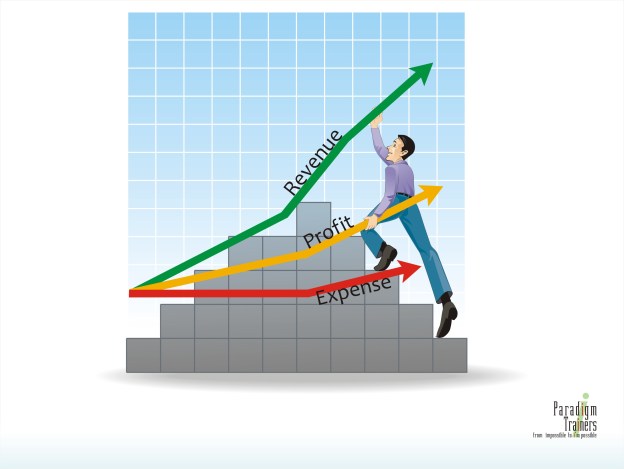
‘How do we talk to CEO/CTO/CFOs (C-Suite Executives) while dealing with capital equipment or high-ticket project sales?’ The above query happens to be one of the frequently asked during the value-selling training programs. It has the following dimensions: expectations of the CEO and the skillset needed by the salesperson.
- Expectations of the CEO: The perspective of a CEO is much wider and long-term vis-à-vis the Purchase officer or a Project Manager. He/she has a thought process which goes beyond the technical specifications and the cost. The CEO considers the ROI, the changing market dynamics in terms of technology, the economy etc which is beyond the techno-commercial specifications.
- Skillset needed by the Salesperson: Underneath the above query one can also guess that the participants wanted ready-made solutions. When I enquired about the books they have read in the recent past, hardly 5% of the people responded in the affirmative. Over the years, the bar has been lowered. Instead of books, the question focusses on the daily newspapers read in general and business papers like ET, Mint, Business line in particular. The scene is no different. Some participants respond they read the newspapers on the mobile. Attributing Google snippets to serious news and thought-provoking articles on economy indicates that serious reading is conspicuous by its absence. Why does eclectic reading which includes knowledge of micro and macro business environment is essential for meaningful conversations?
Earlier the role of a salesperson was that of a dispenser of information in terms of the product specification, the application etc. In the internet age where information is abundant, the role has changed considerably. Today the customer looks at the salesperson in terms of how the latter can add value to the business operations of the former in terms of either increasing the profitability or controlling the costs by reducing the wastage or streamlining the operations, iOT, Automation etc. To answer the above queries, the seller not only has to understand the customer’s business process in depth but also should be aware of the market trends, the emerging role of technology, AI etc.
So, beyond the product specifications the seller needs to know:
- The customer’s business and the process
- Whether the business is stagnant or going through modest or rapid growth
- Growth in terms of Top-Line, Bottom-Line, Market Share or CAGR ( Compound Annual Growth Rate)
- Ability to demonstrate the ROI (Return on Investment)
- If the cost is higher than competition, the ability to demonstrate the TCO which includes the Capex and the Opex, OEE etc. (Total Cost of Ownership, Capital Expenditure, Operating Expenditure, Overall Equipment Effectiveness)
When the ticket size is Rs 1Crore+, the above factors play a critical role in the decision- making process by the CEO, CFO and the CTO. Looking at the above the seller has to wear additional hats of a Financial Consultant as well that of a counsellor to identify their pain points, prioritize the same and propose a customer-centric value-based solution.
Imbibing the above skills is easier said than done and requires considerable discipline in terms of knowledge acquisition and assimilation with reflection.
The paradigm shift which has been brought by internet has changed the rules of business. As Albert Einsten said, ‘ You cannot solve a problem at the level at which it was created.’ One needs to have a different level of thinking (read higher) than the conventional one ( short-cuts or heuristics). One of the ways is to revert to the conventional reading of books and newspapers in print.
Benefits of conventional reading in print:
- There is a fundamental shift in how we process the world when people prefer PowerPoint or AI summary over the printed word. We have become a summary-first society. We want the results without the process. We want the muscle without the workout.
- When we ask for readymade solutions, we want to be fed rather than hunt for it. It is like a pre-digested meal; which while efficient bypasses the critical neural pathways that enable you to take disparate difficult ideas and weave them into a coherent understanding of your own.
- When we read on-line, our brains are in a scrolling mode looking for keywords and links. In a digital environment your brain moves like a pinball; you read a sentence and then click a hyperlink, check a notification and skim a sidebar which is non-linear reading. Whereas linear thinking is an ability to follow a single thread of thought to its logical end. Deep-reading a printed work or a e-reader forces the brain into linear thinking.
- Reading books in print version whether books or newspapers unlike mobiles or tablets provide you a distraction free environment. The tactile experience of holding a book/newspaper further enhances comprehension and supports deeper engagement with content. In a corporate world drowning in surface level communication, the person who can actually read a ten-page technical brief or an editorial or OPED without losing focus is the person who will be different from the crowd.
The physical book is our last fortress against the fragmented distracted mind. By choosing the page over the screen we are not just reading, we are reclaiming our ability to think for ourselves. *
Don’t you think that in-depth reading with focus can add value not only to you but also to your customer?
How to Read a Book: By Mortimer Adler and Charles Van Doren; Book synopsis on: https://www.paradigm-info.com/recommended-books
Contextual Selling – A New Sales Paradigm for the 21st Century by Rajan Parulekar https://www.paradigm-info.com/book-contents
*Book Reading : Are we losing this essential Skill? Sahana Prasad Deccan Herald 20th January 2026
 Rajan Parulekar