
During one of the client meetings, Vijay, Head of Talent Acquisition (which was earlier termed as Personnel, HR etc) was waxing eloquent about how the right hiring and the talent management has been the crucial factor leading to the company’s phenomenal growth.
I was reading an article by a renowned Hindi film critic on similar lines. This media reporter had written about Hrishikesh Mukherjee (Hrishida as he was affectionately called), the Dadasaheb Phalke award winner having directed some of the notable films like Anupama, Anuradha, Satyakam etc. and how he selected Rajesh Khanna for the title role in Anand. The point he was trying to make was the success of the film was primarily due to selection of the right people be it the actors, music director, lyricists among others.
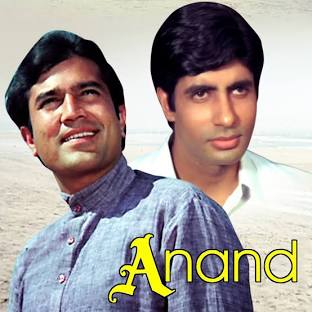
Anand, made in 1970 is a story of a young man who has been diagnosed with intestinal cancer. The doctor had diagnosed that Anand will not survive for more than six months. In spite of the grim future, Anand has a cheerful disposition towards one and all and tries to keep everyone around him happy. The title role was played by Rajesh Khanna and the supporting role of Dr. Bhaskar Banerjee was played by Amitabh Bachchan.
But was the selection of people so logical and linear as we see in hindsight? When Hrishida first conceived of the project in 1955, the person whom he had him in mind was Raj Kapoor but both of them being busy in their own spheres; the project could not take off. By 1968 when Hrishida revived the project, Raj Kapoor was looking old for the role. Shashi Kapoor was thought of but he too was busy.
Hrishida wanted Kishore Kumar to do the role. When he visited Kishore Kumar’s house to discuss the role, the latter mistook the visitor from a distance to be someone else who had not paid Kishore Kumar’s dues. The security guard was instructed not to allow this visitor inside Kishore Kumar’s bungalow. (1)
By this time, Rajesh Khanna who was the emerging superstar got news of the project and approached Hrishikesh Mukherjee. Anand was a low-budget film and Hrishida could not afford his fees. Those days Rajesh Khanna used to charge a princely sum of Rs 5 lakhs per film. When Hrishida expressed the apprehension, Rajesh proposed a creative solution. He said, “I will not charge a Rupee, instead can you give me the distribution rights for the Bombay territory”? This creative solution not only was accepted but also helped Hrishida sell the film on a pan-India basis.
Amitabh Bachhan also had a wild card entry in the film. He was having a negative role in a film called Parwana. One day Omprakash, the character actor met Hrishida and provided a strong recommendation for Amitabh who was cast in the supporting role of Dr. Bhaskar Banerjee.
The script had a role of Dr. Prakash Kulkarni, a friend of Dr. Bhaskar. Ramesh Deo was a renowned actor in Marathi films and theatre. He was struggling to get a breakthrough in Hindi films. He had approached Hrishida a number of times in the past but could not cut much ice. Hrishida one day approached him for the role of Dr Prakash Kulkarni and had planned Nimmi for the role of his better half. Nimmi was one of the leading ladies of yesteryears who had acted in blockbusters like Aan, Udan Khatola etc.
When offered the role, she said, “The role is small; there is no heroine per se in the film and all the spot light is on Anand. Can you at least tell me with whom am I paired with?” Hrishida: “He is Ramesh Deo, a seasoned and a successful actor in Marathi film industry.” Nimmi : “I have not heard that name. I have worked with stars like Dilip Kumar, it is below my dignity to work with such unknown people. Can I make you suggestion? Why don’t you take Raj Kumar for this role instead?” The next day, Hrishida and N.C.Sippy along with Nimmi went to Raj Kumar’s house in Worli.
After exchanging pleasantries, Raj Kumar asked Nimmi to chat up with his wife in the kitchen and said, “Incidentally I have my reservations taking up this role with Nimmi. She has the looks and the charm but that is the past.”
Apart from casting aspersion on Nimmi, Raj Kumar demanded that he needs to have at least a song on him. Hrishida dropped him like a hot potato.
Back to square one, Hrishida zeroed in on Ramesh Deo. Chess was their common interest. One day when he went to Deo’s flat in Bandra for a game of chess, Hrishida was quite impressed with Seema, Ramesh’s wife. Seema was a leading Marathi actress even otherwise.
When Hrishida said, “Ramesh, why did not you suggest Seema for this role”? Ramesh said, “ First of all I myself was not sure of my role, how could I recommend her?” With quirk of fate, Ramesh and Seema Deo thus got the roles of Dr. and Mrs Kulkarni.
The music composer was decided as Salil Chowdhary and the lyricist as Gulzar. The film had a provision for only three songs. But when the film was completed, it had four songs: Maine Tere liye and Na Jiya Laage Na by Gulzar & Zindagi kaisi Hai Paheli and Kahin Door Jab Din Dhal Jaye by Yogesh. How did Yogesh get a wild card entry?
In the late sixties, Gulzar was an established lyricist in the mainstream Hindi cinema whereas Yogesh was a struggling one who was mainly bracketed as a lyricist for B-Grade action films.
Circa 1967 there was a film producer called Anand Gadnis who was making a film and roped in Basu Bhattacharya as the director and Salil Chowdhury as the music director. Gulzar was to be the lyricist. But whenever meetings for the music were scheduled, Gulzar could not make it. As the producer wanted the project to go on fast-track, he asked Salilda to look out for an alternative. Salilda knew Yogesh. This was a golden opportunity for Yogesh to get into popular mainstream cinema. Within no time, he penned lyrics for three situations. Salilda composed the music and later recorded. Due to some unfortunate circumstances, the project was shelved. Yogesh cursed his bad luck, felt that he is destined to be with B grade films. He felt making an entry into the popular genre was not his cup of his tea. He went back to Lucknow fully dejected.
Three months later, a producer called L. B Lachman approached Salilda for a new film called Annadata starring Jaya Bhaduri and Anil Dhawan. When the contract was signed, Salilda said that he already has three songs ready from a previous project. Lachman picked two from the lot; the deal was that the payment was to be released only after all the songs were composed and recorded.
Lachman happened to be close friends with Hrishida. When he shared the audio recordings of the two songs; Hrishida liked the songs and showed interest to purchase both. A compromise was worked out. Hrishida purchased one and that was Kahin Door Jab Din Dhal Jaye.
Next day Yogesh was called for and Hrishida made a cheque payment of Rs 2500 to Yogesh. It was the debut of Yogesh in A grade films. Incidentally this song is based on a Bengali song, Amay Proshno Kore Neel Dhrubotara sung by Hemant Kumar and written and composed by Salil Choudhary.
Salilda had another Bengali composition called Na Mono Lage Na sung by Lata Mangeshkar. He asked Yogesh to compose a Hindi song on similar meter for Annadata. He composed a song for Lachman’s film accordingly.
In the meanwhile, Hrishida asked Gular to compose a song on the same meter. He assumed there should no issues as it is Salilda’s composition, the music director of the film. Now there were two songs based on Salilda’s original Bengali song one for Annadata and the other for Anand. Lachman got furious and said to Hrishida, “Why did you copy this song? What will people say when they hear two Hindi songs based on the same Bengali tune?”
Salilda had another issue to settle for. He said to Hrishida: “This struggling lyricist Yogesh has already composed a song for Lachman which has to be discarded. He needs to be compensated.” Expressing his sincere apologies, Hrishida accepted the proposition and agreed to compensate Yogesh.
Next day when Yogesh went to Hrishida’s house, he refused to take the cheque. Salilda said, “You fool, you are going through tough times. Why did you not take the payment?”
Yogesh: “Any way I have not written this song for Hrishida. He has taken it from Gulzar even otherwise. Ethically it is not right for me to take payment for the work which I have not done.”
As a via media, Hrishida thought of having an extra song. And that is how the fourth song was added in the film and was to be the title song.
When Rajesh Khanna heard the song, he said, “Hrishida, this song is too good. Why keep it as a title song? I want you to film the song on me.” And that’s how Zindagi Kaisi Hai Paheli’ got included in the film.(2)
If you were to see the events by themselves, they are all random in essence. But in retrospect we connect the dots and create a story around the random events . This is called as Narrative Fallacy. It is the human tendency to create a story or an explanation out of a chain of some random events.
When I reflect on the major personal events like admission in an engineering college, getting a job or getting a training assignment; I ask myself whether the specific event happened because of me or in spite of me? Is it merely the talent, intelligence or the hard work of a person or a combination of some fortuitous circumstances complimenting the traits? Should experience make us more confident or humble?
Two years back one of my senior trainer friends, Narayanan was sharing an incident. A public program he had scheduled had to be cancelled due to insufficient nominations. When enquired about the likely reasons for cancellation, he replied, “ Rajan, frankly speaking, I do not know. But if you were to ask me a similar question 20 years back, I would have ascribed the failure to some plausible causes like bad timing, poor marketing strategy, competition etc.” My son Aalhad then made a succinct distinction between causation and correlation leading to specific events.
Quite often the success of an organization is ascribed to the hard work and the intelligence of the top leader. Can you recollect the debate on 70/90 hours per week some successful leaders are advocating? Is that the gospel truth or a narrative fallacy? By becoming aware of this human bias called narrative fallacy; can it make us more humble and help us come out of hubris?
John Brockman the editor of Edge Magazine says: Success = Talent + luck &
Great Success =Little more talent + a lot of luck.(3) What do you think?
References:
- Wikipedia
- Ten Classics by Anita Padhye
- Thinking Fast & Slow – Daniel Kahneman

 Rajan Parulekar